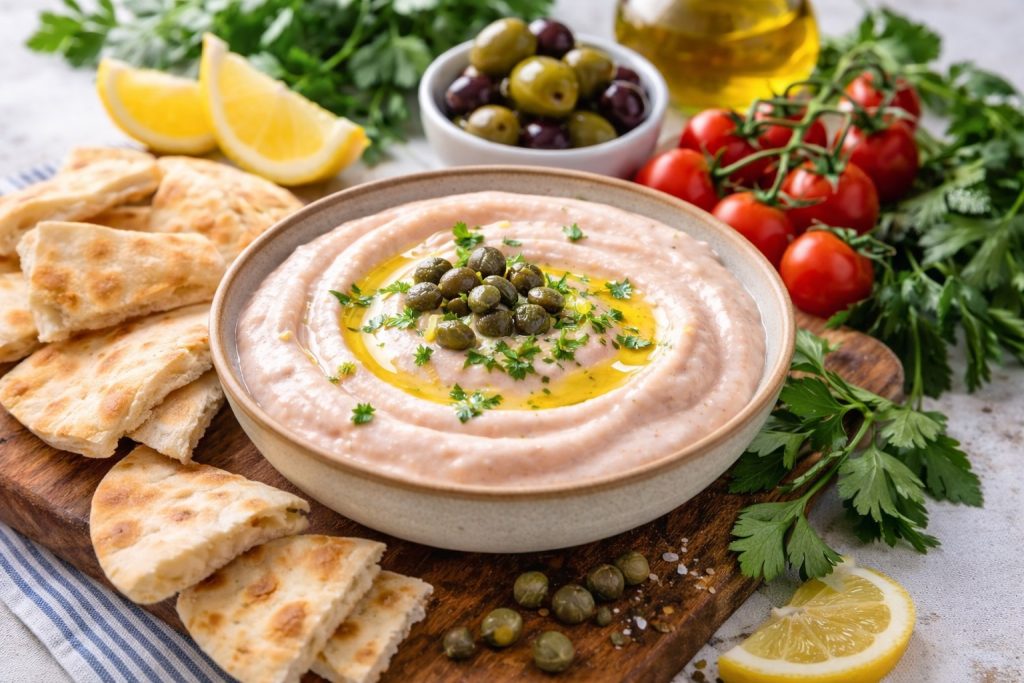
During the winter months in Greece—especially throughout December—food becomes a source of warmth, celebration, and connection. One dish that perfectly captures this seasonal spirit is taramosalata, a creamy traditional Greek dip loved for its delicate seafood flavor and refreshing lemony finish.
Often found on festive winter tables and shared during cozy family gatherings, taramosalata brings lightness and balance to richer cold-season meals. Simple yet full of character, it reflects the essence of Greek cuisine: quality ingredients, time-honored techniques, and bold Mediterranean taste.
What Is Taramosalata?
Taramosalata is a classic Greek dip made from tarama (salted fish roe), blended with olive oil, lemon juice, and either stale bread or potatoes to create a smooth, airy texture. Lightly salty and tangy, it is typically pale pink or off-white in color.
Unlike heavier winter dishes, taramosalata adds freshness to December spreads, making it ideal for festive meals during the colder months.
Why Taramosalata Is Perfect for Winter & December
- A traditional feature of Greek winter tables
- Light yet satisfying during cold weather
- Pairs beautifully with festive breads and vegetables
- Adds brightness to holiday and end-of-year meals
Served as part of a meze spread, taramosalata encourages sharing and togetherness—an essential part of Greek winter dining culture.
Traditional Taramosalata Ingredients
To make authentic Greek taramosalata at home, you’ll need:
- 100 g white fish roe (tarama)
- 3–4 slices stale white bread, crusts removed (or 2 medium boiled potatoes)
- ½ cup extra virgin olive oil
- Juice of 1–2 fresh lemons, to taste
- 1 small onion, finely grated (optional)
- Cold water (if using bread)
Tip: White tarama is traditionally preferred in Greece for its milder flavor and natural color.
How to Make Taramosalata (Step-by-Step)
Step 1: Prepare the Base
If using bread, soak it briefly in cold water and squeeze out the excess. If using potatoes, boil until soft and mash smoothly.
Step 2: Blend the Tarama
Place the fish roe in a food processor and blend until smooth.
Step 3: Add the Base
Gradually add the bread or potatoes, blending until fully combined.
Step 4: Emulsify
With the processor running, slowly drizzle in the olive oil, allowing the mixture to emulsify and become creamy.
Step 5: Add Lemon Juice
Add fresh lemon juice little by little, tasting as you go, until the dip is bright and balanced.
Step 6: Final Touches
Blend in grated onion if desired. Adjust texture with a small amount of cold water if needed.
The finished taramosalata should be light, fluffy, and smooth—never heavy.
How Taramosalata Is Served in Winter
During December and the winter season, taramosalata is commonly served:
- As a Greek meze or appetizer
- Spread on fresh bread or warm pita
- Alongside olives, pickled vegetables, and seafood
- As part of festive winter gatherings
Its subtle flavor allows it to pair effortlessly with other seasonal dishes.
Health & Nutritional Benefits
- Rich in omega-3 fatty acids
- A good source of protein
- Fits naturally into the Mediterranean diet
- Made with simple, minimally processed ingredients
Enjoyed in moderation, taramosalata is both nourishing and satisfying.
A True Taste of Greek Winter
Taramosalata is more than just a dip—it’s a reflection of Greek winter hospitality, festive December tables, and the joy of sharing simple, flavorful food. Whether served at a holiday gathering or a cozy winter meal, it continues to bring warmth, tradition, and brightness to Greek homes.
If you’re exploring authentic Greek winter cuisine, taramosalata is the perfect place to begin.