In Greece, Christmas Day is only the beginning of the festive season. December 26th, known as the second day of Christmas, is slower, quieter, and deeply comforting. Families stay indoors, fireplaces remain lit, and the kitchen becomes the heart of the home. It’s a day devoted to rest, togetherness, and—most importantly—food that warms both body and soul.
While Christmas Day may be about celebration, the day after is about comfort.
A Home That Smells Like Tradition
On December 26th, Greek homes are filled with lingering aromas from the night before—roasted meats, spices, citrus, and honey—mixed with new dishes prepared specifically for leftovers and slow enjoyment. There’s no rush. Meals are stretched across the day, shared with family, neighbors, or unexpected guests.
Food on this day isn’t flashy; it’s hearty, familiar, and deeply emotional.
Giouvetsi: Comfort in a Clay Pot
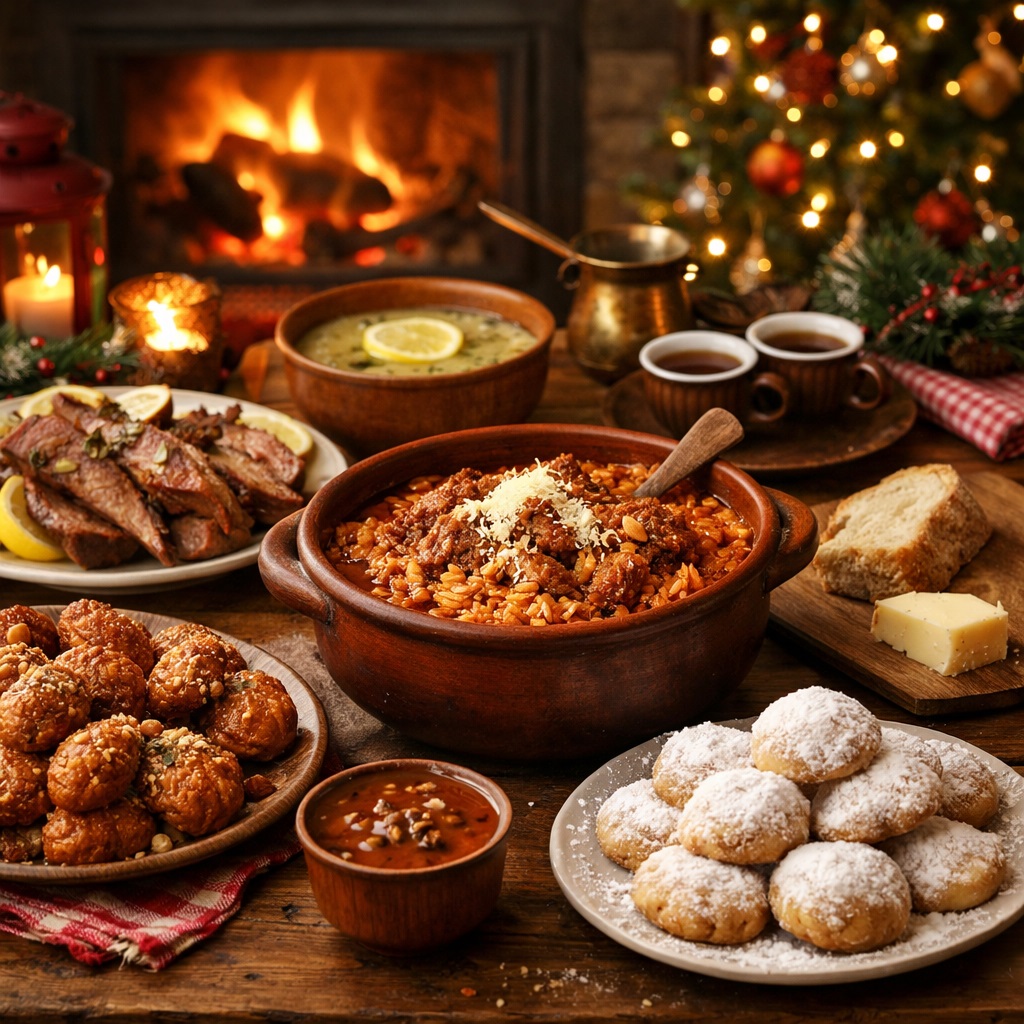
One of the most beloved dishes enjoyed the day after Christmas is giouvetsi—tender beef or lamb slowly baked with orzo pasta in a rich tomato sauce.
Often prepared on Christmas Day and reheated the next, giouvetsi tastes even better after resting overnight. The flavors deepen, the sauce thickens, and the dish becomes the ultimate winter comfort food. Served with grated kefalotyri or mizithra cheese, it’s perfect for long, relaxed family lunches.
Roasted Meats, Reimagined
Leftover Christmas lamb or pork never goes to waste. On December 26th, it’s often:
- Shredded and sautéed with olive oil and herbs
- Added to pasta or rice dishes
- Turned into rustic sandwiches with village bread and mustard
These simple transformations create meals that feel new while honoring the effort of the holiday feast.
Soups That Heal and Warm
Winter in Greece may be mild compared to northern Europe, but December evenings still call for something warm and nourishing. Many households prepare:
- Avgolemono soup using leftover chicken broth
- Simple vegetable soups enriched with olive oil and lemon
- Bean or lentil soups for balance after heavy festive meals
These soups symbolize renewal—light, comforting, and restorative after indulgence.
Christmas Sweets That Linger
Desserts remain ever-present on December 26th. Trays of melomakarona and kourabiedes stay on the table all day, offered with Greek coffee or tea to anyone who visits.
By this day, the cookies have softened, soaked in honey or dusted with sugar, tasting even better than when freshly made. Sweet bites accompany long conversations, laughter, and storytelling.
A Day Rooted in Togetherness
The day after Christmas in Greece isn’t about events or outings—it’s about being home. Food is served slowly, plates are refilled without asking, and time seems to stretch. Grandparents share stories, children snack endlessly, and the kitchen never truly closes.
It’s a reminder that Greek food is not just about recipes—it’s about warmth, memory, and connection.
Why December 26th Matters in Greek Food Culture
This quiet holiday reveals the true soul of Greek cuisine:
- Respect for ingredients
- Love for leftovers and slow cooking
- Food as a bridge between generations
In Greece, the day after Christmas is not an afterthought—it’s a celebration of comfort, simplicity, and the joy of being together.
And long after the decorations come down, it’s these warm, familiar meals that stay in the heart.