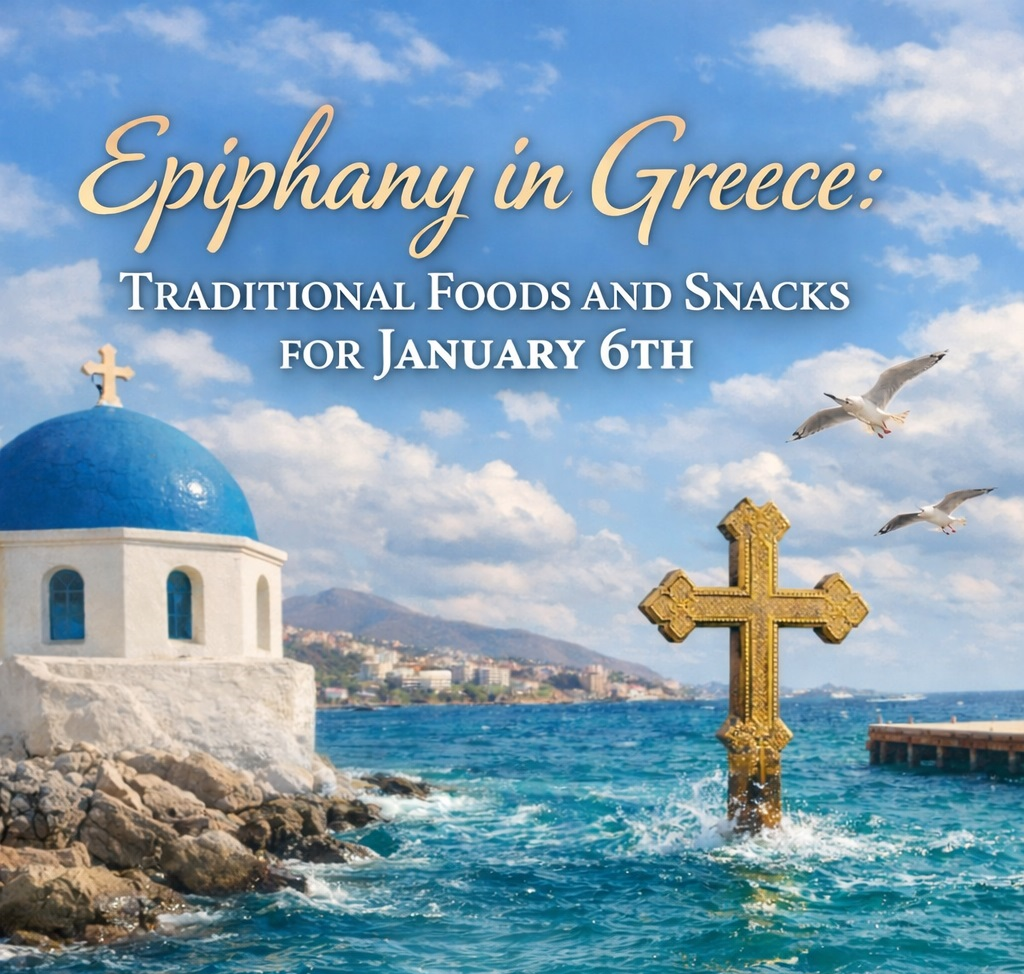
January 6th marks Epiphany (Θεοφάνεια – Theofania), one of the most spiritually significant days in the Greek Orthodox calendar. Celebrating the baptism of Jesus Christ in the River Jordan, Epiphany brings together deep religious meaning, vibrant local traditions, and comforting winter food that reflects Greece’s seasonal lifestyle.
While Epiphany is best known for the Blessing of the Waters and the dramatic cross-diving ceremonies held in coastal towns and rivers across Greece, food also plays a quiet but important role in the day—simple, nourishing dishes suited to January’s cold weather and the reflective nature of the holiday.
The Meaning of Food on Epiphany
Unlike Christmas or Easter, Epiphany is not centered on lavish feasting. Instead, traditional foods are:
- Modest and homemade
- Seasonal and warming
- Shared with family after church services
In many households, the focus is on comfort foods that bring warmth and balance after the long holiday season.
Traditional Foods and Snacks Enjoyed on January 6th
1. Legume-Based Dishes (Fasolada & Lentil Soup)
Hearty bean soups are common on Epiphany, especially fasolada (white bean soup) and fakes (lentil soup). These dishes are filling, nutritious, and perfect for winter, often served with olive oil, olives, and crusty village bread.
2. Fried Fish and Seafood
In coastal areas and islands, seafood plays a symbolic role due to the connection with water. Simple fried fish, grilled sardines, or salted cod may appear on the table, reflecting both tradition and availability.
3. Laganá Bread (Leftover from Epiphany Season)
While laganá is more strongly associated with Clean Monday, many bakeries still offer it around Epiphany. This sesame-topped flatbread pairs beautifully with soups, beans, and spreads.
4. Olive Oil Dips and Spreads
Small plates featuring taramasalata, olive paste, or garlic-based spreads are popular accompaniments, keeping meals light yet flavorful.
Sweet Treats Still Found After the Holidays
Although most Christmas sweets begin to disappear after New Year’s, many Greek bakeries still offer:
- Melomakarona – Honey-soaked cookies with walnuts
- Kourabiedes – Almond shortbread dusted with powdered sugar
- Diples – Thin fried pastry drizzled with honey and nuts
These sweets are often enjoyed with Greek coffee after attending Epiphany services.
Drinks That Warm the Winter Day
After church and outdoor celebrations, Greeks often turn to warm beverages such as:
- Greek coffee
- Mountain tea (τσάι του βουνού)
- Chamomile or sage tea
In some regions, a small glass of tsipouro or raki may be shared, especially after the cross-diving ceremonies by the sea.
Epiphany Food Traditions Across Greece
- Northern Greece: More soups and stews due to colder temperatures
- Islands: Seafood takes center stage
- Rural villages: Home-cooked legumes and bread dominate
Though dishes vary by region, the spirit remains the same—simple food, shared warmth, and respect for tradition.
A Day of Reflection, Community, and Comfort
Epiphany in Greece is less about indulgence and more about balance—spiritual renewal paired with comforting winter food. Whether enjoyed in a bustling seaside town or a quiet village kitchen, the traditional foods of January 6th reflect Greece’s deep connection between faith, seasonality, and everyday life.
For visitors and locals alike, Epiphany offers a beautiful reminder that some of the most meaningful meals are also the simplest.