
Mastic gum — the natural resin harvested from the Pistacia lentiscus tree grown mainly on the Greek island of Chios — has long been part of Mediterranean tradition. Beyond its role as a flavorful chewing gum and natural snack ingredient, modern research is now exploring its potential digestive health benefits. But what does science really say? Let’s break down the evidence.
What Is Mastic Gum?
Mastic gum (also known as mastiha) is a sticky resin traditionally chewed for its unique taste and texture. Ancient Greek and Middle Eastern cultures used it not just as food but also as a folk remedy for various ailments — including digestive discomfort. Today, scientists are investigating these claims through clinical and preclinical studies.
Scientific Evidence on Digestion
1. Functional Dyspepsia — Relief from Upper Digestive Symptoms
One of the most compelling clinical studies looked at patients with functional dyspepsia — a common digestive disorder characterized by upper-abdominal discomfort, bloating, and indigestion. In a randomized, placebo-controlled trial, people taking Chios mastic gum (350 mg three times daily) experienced a significant reduction in symptom severity compared to those on placebo after just three weeks.
What this means: Mastic gum may help ease symptoms like fullness, bloating, and discomfort in individuals with non-specific digestive complaints.
2. Antioxidant and Anti-Inflammatory Effects in the Gut
Mastic gum’s compounds — especially triterpenes, polyphenols, and other bioactive molecules — have been shown to exert anti-inflammatory and antioxidant effects. These actions may protect the intestinal lining and reduce inflammation, which are important factors in digestive health.
This isn’t direct proof of a digestive cure, but it supports why mastic gum could alleviate digestive irritation and support gut tissue health over time.
3. Gut Microbiota Modulation
Emerging research suggests that mastic gum may influence the gut microbiome — the complex community of microorganisms living in our intestines. In animal studies, mastic supplementation partially restored microbiota diversity, an indicator often linked with better gut health.
A multicenter clinical study also noted changes in gut microbiota composition among patients taking mastic gum, demonstrating its potential prebiotic-like effects — though more human research is needed.
4. Antibacterial Action Against H. pylori
Some older research has shown that mastic gum exhibits activity against Helicobacter pylori, a bacterium associated with gastritis and peptic ulcers. In laboratory and small human studies, mastic gum reduced H. pylori levels without conventional antibiotics.
Why it matters: If further confirmed in larger trials, this antibacterial property could partly explain why some people report fewer digestive complaints when consuming mastic gum.
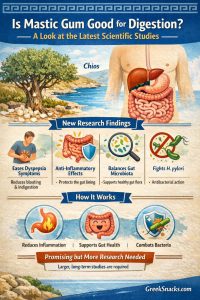
How Mastic Gum Might Work for Digestion
Based on current science, several mechanisms are proposed:
- Reducing inflammation and oxidative stress in the gut lining.
- Modulating gut bacteria and supporting a balanced microbiome.
- Easing indigestion and dyspepsia symptoms through local effects on the digestive tract.
- Antibacterial action against digestive pathogens like H. pylori.
What the Research Doesn’t Yet Show
Despite promising signs, major limitations remain:
- Most evidence is from small studies or short durations. Larger, long-term clinical trials are needed.
- Effects can vary widely between individuals.
- Dosage and form (chewing resin, powder, or supplements) aren’t standardized in research.
So while mastic gum shows potential, it’s not a substitute for medical treatment in serious gastrointestinal conditions.
So, Is Mastic Gum Good for Digestion?
The current scientific evidence suggests yes — mastic gum may support digestive health, especially in easing symptoms of dyspepsia and promoting a healthier gut environment. Its anti-inflammatory, antioxidant, and microbiota-modulating actions provide plausible mechanisms for these benefits.
However, more large-scale human studies are needed to confirm these effects and define optimal use.
Tips needed in Trying Mastic Gum
- Start with small amounts or follow dosage used in clinical studies (e.g., ~350 mg, 1-3 times/day).
- Consider chewing natural resin or using powder/capsules from reputable sources.
- Consult a healthcare provider if you have chronic digestive conditions or are on medication.