Greek snacks aren’t just about taste—they’re about tradition, simplicity, and ingredients that have stood the test of time. Long before “clean eating” became a trend, Greeks were snacking on foods made from olive oil, herbs, grains, and dairy sourced close to home.
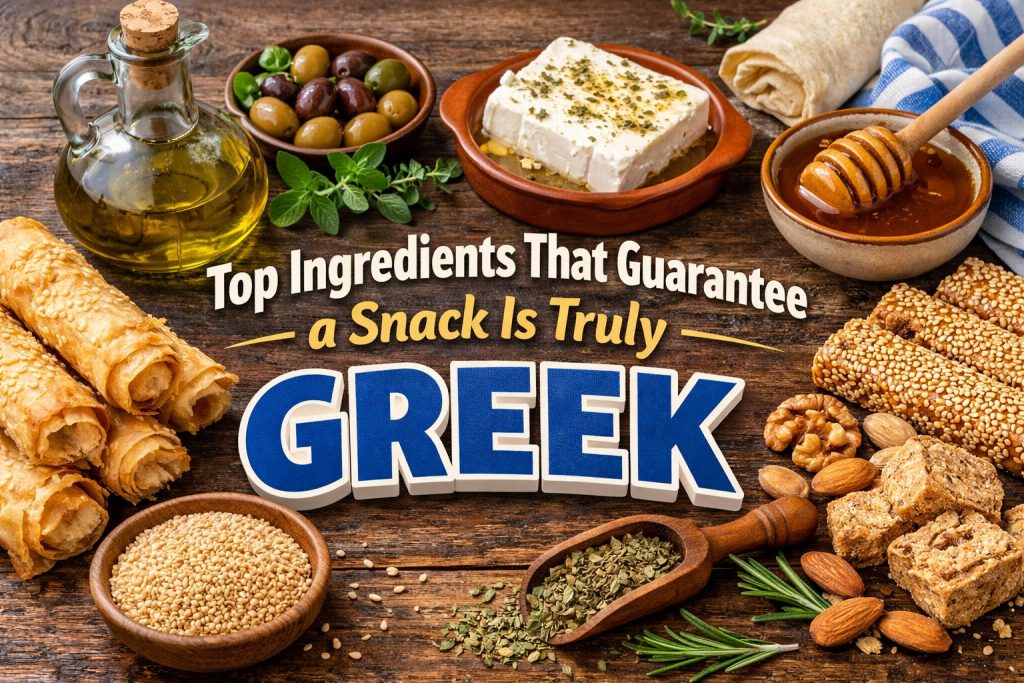
If you’ve ever wondered what separates a truly Greek snack from a Mediterranean look-alike, it almost always comes down to the ingredients. These are the core components that instantly signal authenticity.
Extra Virgin Olive Oil (The Non-Negotiable)
If a snack claims to be Greek but uses seed oils, it’s already off to a bad start.
Extra virgin olive oil is the backbone of Greek cuisine and appears in everything from savory pies to baked rusks and biscuits. Greek olive oil—especially from regions like Crete, Kalamata, and Lesvos—is prized for its peppery finish and high polyphenol content.
Why it matters:
Greek snacks rely on olive oil not just for flavor, but for texture, aroma, and nutritional value. It replaces butter in many recipes and adds depth without heaviness.
Feta Cheese (Protected and Powerful)
Real feta is never just “crumbly white cheese.” Authentic Greek feta is PDO-protected, made from sheep’s milk or a blend of sheep’s and goat’s milk, and aged in brine.
You’ll find it in:
- Savory pastries
- Cheese pies
- Filled breads and rolls
- Snack-size meze
Why it matters:
The tangy, salty bite of true feta is unmistakable. If a snack uses cow’s milk “feta-style” cheese, it’s not the real thing.
Greek Yogurt (Thick, Tangy, Essential)
Greek yogurt isn’t just strained yogurt—it’s a defining ingredient with a dense, creamy texture and a distinct tang. In snacks, it’s often used in:
- Doughs and batters
- Savory dips and spreads
- Light sweet snacks paired with honey
Why it matters:
Greek yogurt adds richness and protein without artificial thickeners. Its presence is a strong indicator of authenticity.
Honey (Especially Thyme or Pine Honey)
Greek honey is wildly aromatic, thanks to the country’s biodiversity. Thyme honey, pine honey, and wildflower varieties are staples in traditional snacks.
Used in:
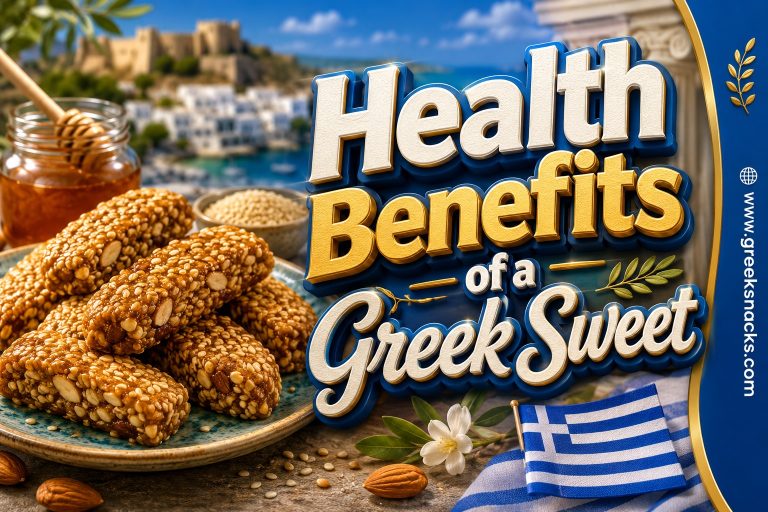
- Sesame bars (pasteli)
- Yogurt-based snacks
- Biscuits and nut bites
Why it matters:
Greek snacks use honey for balance, not overpowering sweetness. The flavor is floral, earthy, and complex—not syrupy.
Sesame Seeds (A Quiet Hero)
Sesame has been a staple in Greek snacking since antiquity. It appears toasted, raw, or bound with honey.
Classic examples include:
- Pasteli
- Bread rings and crackers
- Savory snack crusts
Why it matters:
Sesame seeds signal simplicity and tradition—two hallmarks of Greek food culture.
Phyllo Dough (Paper-Thin and Handled with Care)
Phyllo dough is iconic in Greek snacks, especially baked ones. Whether filled with cheese, herbs, or nuts, phyllo delivers crisp layers without heaviness.
Why it matters:
Authentic Greek phyllo is thin, delicate, and never puffed or pastry-like. It creates texture, not bulk.
Oregano and Wild Herbs
Greek oregano is stronger, more aromatic, and more pungent than many international varieties. Along with thyme, dill, and mint, it defines the flavor of savory snacks.
Why it matters:
Greek snacks rely on herbs—not spices—for flavor. If oregano is front and center, you’re likely in Greek territory.
Barley and Wheat Rusks
Rusks (paximadia) are a cornerstone of Greek snacking, especially in Crete. Made from barley or whole wheat, they’re dry, crunchy, and built to last.
Why it matters:
Rusks reflect Greece’s resourceful food culture and are rarely ultra-processed.
Nuts from the Mediterranean
Walnuts, almonds, pistachios, and hazelnuts show up in both sweet and savory snacks. They’re often lightly toasted and paired with honey or herbs.
Why it matters:
Greek snacks emphasize natural fats and textures, not artificial crunch.
Simple Ingredient Lists (Nothing Extra)
Perhaps the biggest sign a snack is truly Greek? A short ingredient list. Traditional Greek snacks don’t rely on preservatives, flavor enhancers, or synthetic sweeteners.
If you see:
- Olive oil instead of vegetable oil
- Honey instead of corn syrup
- Herbs instead of flavorings
You’re on the right track.
Greek snacks are defined less by branding and more by what’s inside. When you see olive oil, feta, yogurt, honey, sesame, herbs, and phyllo working together, you’re not just eating a snack—you’re tasting centuries of tradition.
In a world full of “Greek-inspired” products, knowing these ingredients helps you spot the real thing every time.