Whenever I visit Greece, I make it a point to end the day with a glass of ouzo. Curiously, I rarely enjoy the strong licorice flavor when I’m back in the United States, but in Greece it feels like an essential part of the experience. From olives served at breakfast to an evening ouzo shared with friends, the drink is woven into the fabric of daily life.
Ouzo is rarely consumed straight. A splash of water or a few ice cubes transforms the clear spirit into a cloudy, milky-white drink. There’s even a bit of ritual to it. Watching the liquid change color feels almost magical, and joining in the tradition is a small way of connecting with local culture beyond the typical tourist experience.
When Greeks want to offer true hospitality, however, they often reach for tsipouro instead. Similar to Italian grappa, this potent spirit packs a stronger punch than ouzo and is commonly enjoyed during lively gatherings filled with storytelling, laughter, and endless toasts. Shared around crowded tables late into the night, tsipouro embodies the warmth, generosity, and celebratory spirit that make Greek tavernas so memorable.
In Greece, there’s no better place to “go Greek” than the local taverna. It doesn’t matter whether I’m tucked into the car-free island of Hydra, overlooking an untouched beach in the rugged Mani Peninsula, or seated in a tiny spot in the shadow of Athens’ Acropolis — when evening falls, I’m drawn to the easygoing warmth of taverna life.
At first glance, Greek tavernas can seem modest: simple décor, wobbly stools, and weathered wooden tables. But spend a little time there and their true richness reveals itself — in character, tradition, and atmosphere. Dice rattle across backgammon boards as locals lean in with quiet intensity. Worry beads slip rhythmically through practiced fingers. Hand-rolled cigarettes dangle from relaxed lips, while stray cats patiently wait for the slightest chance to claim an empty chair — or a forgotten plate.
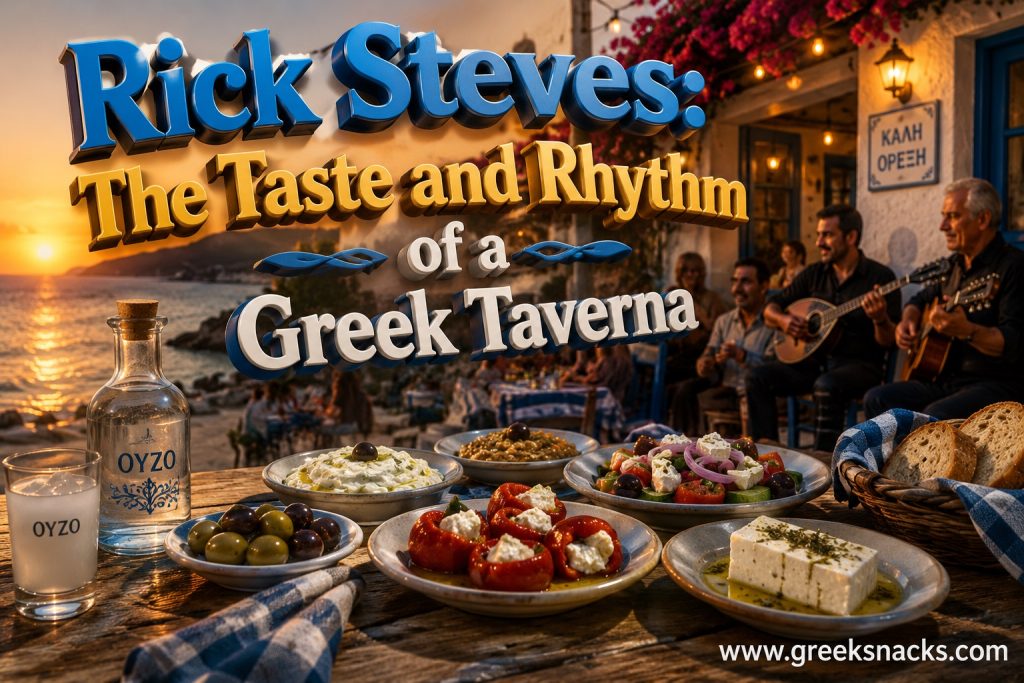
I usually settle right in the middle of it all, order a glass of ouzo, and start with a spread of mezedes: olives, dips, and feta-stuffed peppers meant for sharing. It’s the perfect way to ease into the evening while weighing up the night’s main course. In coastal tavernas, the choice can be almost theatrical — with today’s catch often displayed just steps away, waiting to be grilled fresh over an open flame.
Taverna menus are usually small, with a familiar set of dishes that appear just about everywhere you go. Unlike the French, who constantly refine and reinvent their cuisine in pursuit of complexity, the Greeks discovered a simple formula long ago — and have stayed with it ever since, to great effect. At the heart of it all are what you might call the four pillars of Greek cooking: olives (and olive oil), tangy feta cheese, ripe tomatoes, and crisp, flaky phyllo dough. Nearly every dish can be traced back to some combination of these essentials. It’s uncomplicated food, but deeply satisfying.
For the most authentic taverna experience, it’s best to arrive around 9 p.m., when locals begin to gather in earnest. Show up earlier and you’ll often find yourself surrounded mainly by other visitors. In cities, popular tavernas may stay open well past midnight, while in smaller towns things tend to be more flexible. Opening hours in Greece are rarely strict — and depending on how busy the night is, a taverna might close simply because the staff decide it’s time to head home.
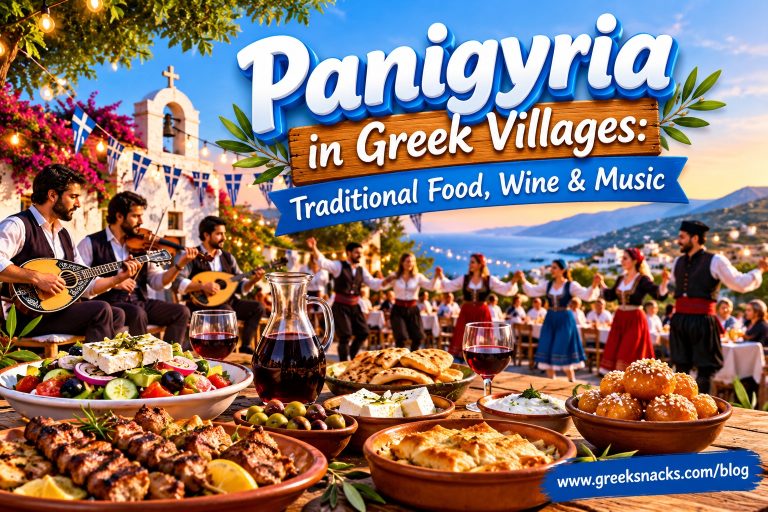
Stay late enough and you’re likely to see another side of Greek culture: dancing. Traditional favorites like the elegant kalamatianos circle dance and the energetic syrtaki often appear at celebrations such as weddings and baptisms, but in truth, no special occasion is really required — especially when there’s live music and a bit of ouzo flowing. I’ve seen tables erupt into spontaneous celebration, with dancers applauding musicians by tossing flowers or even plates, before climbing up onto chairs and tabletops and dancing well into the early hours.
Music is woven into everyday life in Greece. On a summer weekend evening, it’s common to wander through almost any town and stumble upon musicians gathered outdoors, playing traditional folk tunes on the bouzouki — a long-necked instrument similar to a mandolin. As night falls and the streets fill with energy, the crowd loosens up, the bouzouki rhythms grow more animated, and the ouzo-fueled atmosphere of the taverna takes on a life of its own. Opa!
There’s something effortless about slipping into the Greek way of life. The warmth of the people, the rich flavors of the food and drink, and the constant presence of music and dance all come together to create a culture that invites you in and makes it easy to simply relax and belong.
Source: Heraldnet Edited by Bernie