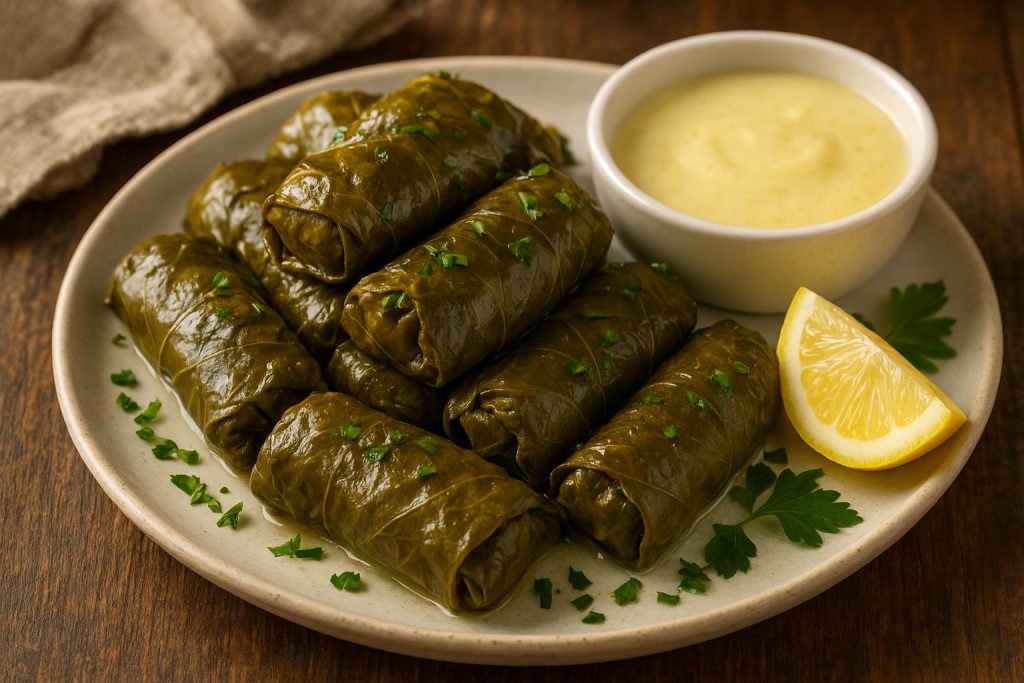
Sarmades are one of the most iconic and comforting dishes in Greek cuisine. These tender rolls of vine or cabbage leaves stuffed with rice, herbs, and sometimes minced meat are a staple on Greek tables, loved for their rich flavors and homely charm.
Sometimes known as dolmadakia or lachanodolmades depending on the type of leaf used, sarmades represent the heart of Greek cooking — simple ingredients elevated by time, care, and tradition.
Basic Components
The fundamental components of sarmades include:
- Grape Leaves: The leaves are the star of the dish, providing a tender, slightly tangy flavor that complements the filling.
- Filling: The filling usually consists of rice, herbs, and spices, with variations that may include ground meat, vegetables, or nuts.
- Seasoning: Common seasonings include salt, pepper, lemon juice, and olive oil, enhancing the overall flavor profile.
Evolution of the Dish
As cultures interacted through trade and conquest, the concept of sarmades evolved. In Greece, sarmades became particularly popular, especially during the Ottoman period. Different regions developed their own variations, influenced by local ingredients and culinary practices. For example, in some parts of Greece, sarmades might be made with a blend of rice and minced lamb, while others may focus solely on vegetarian fillings.
Ingredients and Preparation
Basic Ingredients
The traditional filling for sarmades typically includes:
- Rice: Short-grain rice is preferred for its ability to absorb flavors and maintain a slightly sticky texture.
- Herbs: Fresh herbs such as dill, parsley, and mint are commonly used, imparting a fresh and aromatic quality to the filling.
- Onion: Sautéed onions add sweetness and depth of flavor to the mixture.
- Meat: While many recipes are vegetarian, minced lamb or beef is often included for additional richness.
Preparing the Grape Leaves
- Fresh vs. Jarred Leaves: Fresh grape leaves should be blanched in boiling water for a few minutes to soften them. If using jarred leaves, rinse them thoroughly to remove excess brine.
- Making the Filling: In a mixing bowl, combine the rice, finely chopped herbs, sautéed onions, and minced meat (if using). Season the mixture with salt, pepper, and a splash of lemon juice for brightness.
- Wrapping: Place a spoonful of filling on the center of each grape leaf. Fold the sides over the filling and roll tightly from the stem end to the tip, creating a secure parcel.
- Cooking the Sarmades: Arrange the wrapped sarmades in a pot, seam side down. Add enough water or broth to cover them, and drizzle with olive oil. Simmer gently until the rice is cooked and the flavors meld, usually about 45 minutes to an hour.
Variations of Sarmades
While the traditional sarmades are made with rice and herbs, numerous regional variations exist:
- Meat-Filled Sarmades: In some regions, the filling includes a combination of rice and minced meat, often flavored with spices like cinnamon or allspice.
- Vegetarian Options: Some versions focus solely on rice, herbs, and vegetables, making them suitable for vegetarians and vegans.
- Sarmades with Nuts and Dried Fruits: In certain areas, nuts like pine nuts or almonds and dried fruits such as raisins are added to the filling, providing a delightful sweetness and crunch.
Cultural Significance
Sarmades are more than just a delicious dish; they embody the spirit of Greek hospitality and the importance of family and community. Often served at gatherings, celebrations, and holidays, they represent a connection to tradition and heritage.
Family Traditions and Celebrations
Preparing sarmades can be a family affair, with generations coming together to roll and cook them. This communal aspect of cooking fosters bonds and creates cherished memories. During festive occasions like Easter or Christmas, sarmades are a staple, symbolizing abundance and togetherness.
Symbol of Hospitality
In Greek culture, offering food to guests is a sign of respect and warmth. Sarmades are frequently served at gatherings, reflecting the host’s generosity. Their presence on the table signifies a welcoming atmosphere, inviting everyone to share in the meal and the experience.
Serving Suggestions
Sarmades can be enjoyed warm or cold, making them versatile for different occasions. They are often accompanied by:
- Lemon Wedges: Adding a zesty brightness that complements the flavors of the filling.
- Yogurt or Tzatziki: These creamy accompaniments provide a refreshing contrast and enhance the dish’s overall appeal.
- Olive Oil: A drizzle of high-quality olive oil adds richness and depth.
Conclusion
Sarmades are a quintessential part of Greek cuisine, showcasing the country’s love for fresh ingredients and flavorful dishes. Their historical roots, regional variations, and cultural significance make them a cherished recipe that continues to bring families together around the table. Whether enjoyed at a festive gathering or as a comforting home-cooked meal, sarmades embody the essence of Greek hospitality and culinary tradition, inviting everyone to savor the flavors of Greece.
#Sarmades #GreekStuffedVineLeaves #Lachanodolmades #Dolmadakia #TraditionalGreekRecipes #GreekCuisine #MediterraneanFood #Avgolemono #GreekVegetarianDishes #AuthenticGreekRecipes