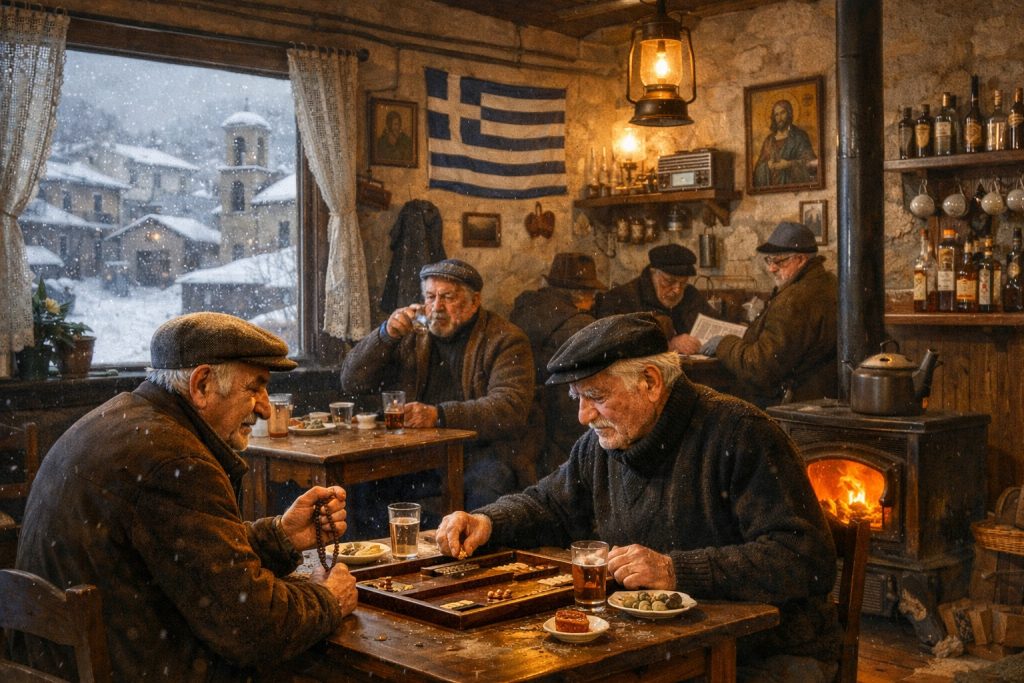
When winter settles over the Greek countryside and the mountains grow quiet, there is one place that never loses its warmth: the kafeneio. More than just a café, the traditional Greek kafeneio is the social heart of village life, especially during the colder months. It’s where stories are shared, time slows down, and warmth is found—not just from the fire, but from human connection.
In winter, when daylight fades early and outdoor life pauses, the kafeneio becomes a second home for locals. Wooden chairs scrape softly against tiled floors, backgammon pieces click rhythmically, and conversations drift through the room like familiar music. This is Greece at its most authentic.
Why the Kafeneio Matters More in Winter
During summer, villages are busy with visitors, festivals, and outdoor gatherings. But winter belongs to the locals. The kafeneio becomes a daily ritual—opened early in the morning and often staying lively well into the evening.
Farmers, retirees, shepherds, and shop owners gather to warm up, catch up on village news, debate politics or football, and simply pass the time together. There’s no rush here. You don’t come to a kafeneio to “grab something quickly.” You come to stay.
What You Drink in a Greek Kafeneio
The drink menu in a traditional kafeneio is simple, classic, and deeply tied to Greek habits.
Greek Coffee (Ellinikos Kafes)
Served hot, strong, and slowly, Greek coffee is the soul of the kafeneio. Brewed in a briki and served in a small cup with foam on top, it’s meant to be sipped, not rushed. In winter, it’s often enjoyed for hours, reheated if needed.
Mountain Tea (Tsai tou Vounou)
Especially popular in winter, this herbal tea made from dried mountain herbs is soothing and believed to help with colds and overall wellness. It’s often served plain or with a slice of lemon and honey.
Tsipouro or Raki
As the day turns into evening, stronger spirits appear. Tsipouro (or raki, depending on the region) is served in small glasses, often homemade, and shared among friends. In winter, it’s almost medicinal—warming from the inside out.
Ouzo (Less Common in Winter)
While more associated with summer, ouzo still makes an appearance, especially when paired with small plates of food.
Wine
Local red wine is another winter favorite, usually house-made and served simply, without ceremony.
What You Eat in a Greek Kafeneio
Food in a kafeneio is not about variety—it’s about comfort. Portions are small, flavors are bold, and everything pairs perfectly with conversation and drinks.
Meze Plates
You’ll often find small dishes brought to the table without much fuss:
- Olives (usually local)
- Feta cheese or graviera
- Bread or paximadia (rusks)
- Pickled vegetables
Grilled or Fried Bites
Depending on the kafeneio, you might be offered:
- Loukaniko (Greek sausage)
- Fried cheese
- Meatballs (keftedakia)
- Sardines or small fish
Beans and Pulses
In colder villages, simple dishes like giant beans, lentils, or chickpeas may be available, especially during midday.
Seasonal Treats
In winter, you might also find:
- Nuts
- Dried figs
- Spoon sweets
- Simple homemade desserts
More Than Food and Drink
What truly defines a kafeneio isn’t what’s on the table—it’s what happens around it. Games of backgammon (tavli), animated debates, teasing jokes, and long silences all coexist comfortably. Everyone knows everyone. Outsiders are welcomed, often with curiosity and generosity.
There’s no Wi-Fi rush, no background music playlist, no need to check the time. The kafeneio teaches a slower rhythm of life—one that winter naturally encourages.
A Living Tradition
While modern cafés have spread across Greece, the kafeneio remains unchanged in spirit. Especially in winter, it continues to serve its original purpose: bringing people together when the world outside feels cold and quiet.
To sit in a Greek village kafeneio on a winter afternoon is to understand Greece beyond postcards and beaches. It’s warmth without excess, hospitality without effort, and tradition without performance.
And once you’ve experienced it, you’ll understand why the kafeneio isn’t just a place—it’s a way of life.