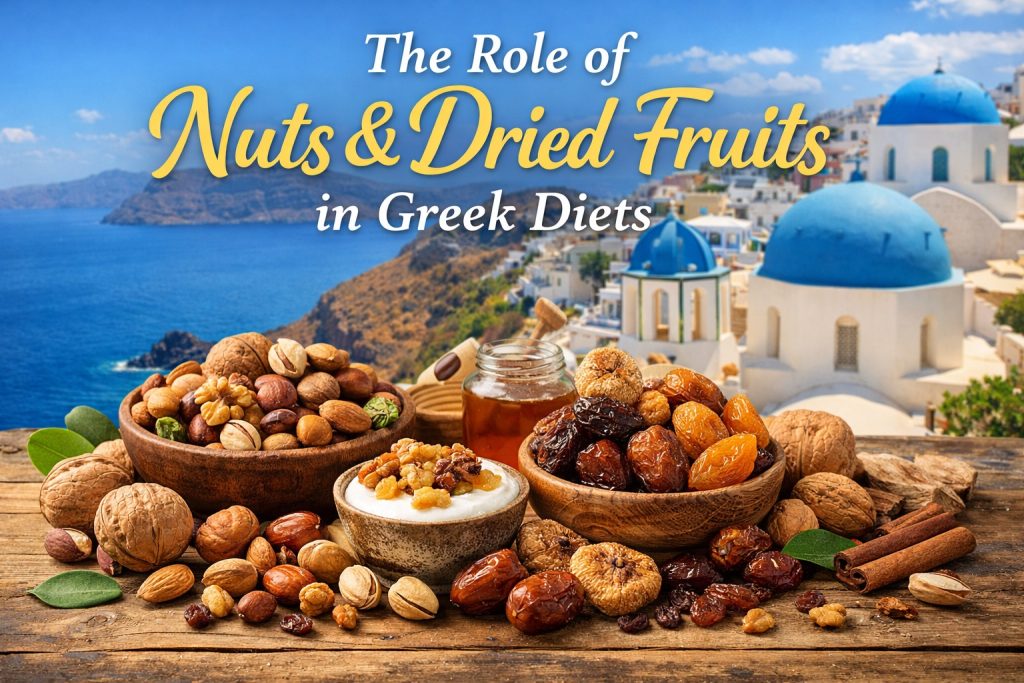
Nuts and dried fruits have been a cornerstone of Greek diets for thousands of years. Long before modern nutrition trends highlighted their benefits, ancient Greeks relied on these natural foods for energy, nourishment, and longevity. Today, they remain deeply woven into everyday eating habits, traditional recipes, and cultural rituals across Greece.
A Tradition Rooted in History
In ancient Greece, nuts such as almonds, walnuts, and pistachios were prized for their sustaining power and long shelf life. Dried figs, raisins, and dates were commonly consumed by travelers, athletes, and soldiers. These foods were easy to store, transport, and enjoy year-round—an essential advantage in times when fresh produce was not always available.
Hippocrates himself praised figs and nuts for their health-supporting properties, recognizing their value long before the science of nutrition existed.
Everyday Staples in Modern Greek Life
Even today, nuts and dried fruits are an integral part of daily Greek eating habits. A small bowl of mixed nuts often accompanies coffee, while dried fruits are enjoyed as quick snacks at home, work, or school. They are also commonly served during religious fasting periods, when animal products are avoided but energy-rich foods are still needed.
In Greek households, it’s not unusual to find jars of raisins, dried figs, and nuts ready to be added to meals or enjoyed on their own.
Key Ingredients in Traditional Greek Cuisine
Nuts and dried fruits play a vital role in many classic Greek dishes and desserts. Walnuts are essential in recipes like baklava and karydopita (walnut cake), while almonds appear in amygdalota (almond cookies) and almond-based sauces. Raisins and dried figs add natural sweetness to breads, pilafs, and even savory stews.
They are also frequently used in festive foods, particularly during Christmas, Easter, and name-day celebrations, symbolizing abundance and good fortune.
Nutritional Powerhouses
Part of their lasting importance lies in their nutritional value. Nuts provide healthy fats, protein, fiber, and essential minerals such as magnesium and zinc. Dried fruits offer natural sugars for energy, along with fiber, potassium, and antioxidants.
Within the context of the Mediterranean diet—a dietary pattern strongly associated with heart health and longevity—nuts and dried fruits serve as smart alternatives to processed snacks and refined sugars.
A Perfect Match for the Mediterranean Diet
The Greek diet emphasizes balance, moderation, and whole foods. Nuts and dried fruits fit perfectly into this philosophy. Consumed in small portions, they provide satisfaction, flavor, and nutrition without excess.
Whether paired with yogurt and honey, added to salads, or eaten as a simple snack, they reflect the Greek approach to food: nourishing the body while celebrating taste.
From Ancient Roots to Modern Tables
The role of nuts and dried fruits in Greek diets is more than nutritional—it is cultural. These foods connect modern Greek tables with ancient traditions, seasonal rhythms, and shared moments of hospitality.
In a world increasingly focused on fast and processed foods, Greece’s enduring love for nuts and dried fruits stands as a reminder that simple, natural ingredients can remain timeless, delicious, and deeply nourishing.