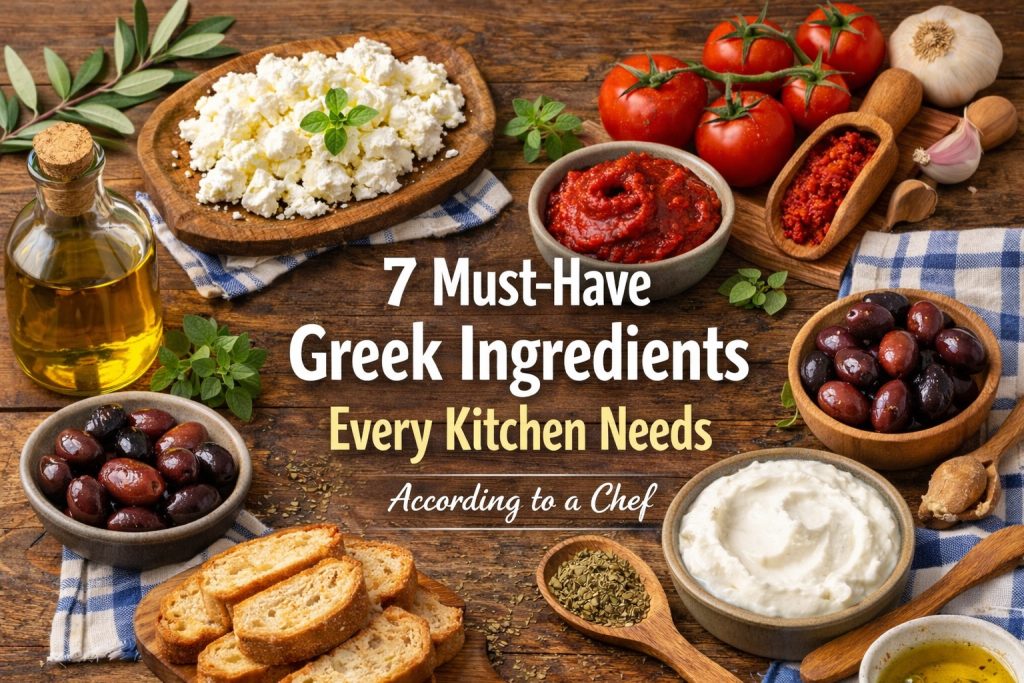
Every cuisine is shaped by generations of tradition, and that history influences everything on the plate—from the dishes themselves to the techniques behind them and, most importantly, the ingredients. For Greek chef, author, entrepreneur, and TV personality Maria Loi, great cooking begins with sourcing the right ingredients.
As a Global Ambassador of Greek Gastronomy, Loi firmly believes that the most authentic and flavorful Greek food comes from ingredients grown and produced in Greece. She recently stopped by the Delish Test Kitchen to share the staples she never cooks without.
Feta
Feta is practically inseparable from Greek cuisine, and for good reason. This crumbly, brined cheese has been produced in Greece for thousands of years and now carries Protected Designation of Origin (PDO) status, meaning its quality and character are directly tied to its place of origin.
While countries like France, Bulgaria, and the United States make similar cheeses labeled “feta,” Loi insists they don’t compare to the real thing. Authentic Greek feta has a distinct texture and depth of flavor that simply can’t be replicated elsewhere—and for her, using anything else is not an option.
Tomato Paste
Though tomatoes arrived relatively late to the Mediterranean, they’ve become essential to many Greek dishes. In Greece, tomato paste isn’t just a background player in soups and sauces—it’s sometimes enjoyed straight from the can, spread on toast with a drizzle of olive oil.
This may sound unusual to American palates, but Greek tomato paste is remarkably different. Instead of tasting acidic or metallic, it’s rich, naturally sweet, and deeply flavorful. Thanks to specific tomato varieties, Mediterranean soil, and strict production standards, the difference is undeniable. Loi’s go-to is the award-winning tomato paste from Kyknos.
Kalamata Olives
Olives are central to Greek cooking, prized for the salty, briny punch they add to savory dishes. Among the many varieties, Kalamata olives reign supreme. Named after the city of Kalamata, these olives are also PDO-protected.
Beyond their deep color and bold flavor, Kalamata olives are rich in heart-healthy polyphenols, making them as nutritious as they are delicious.
Oregano
The unmistakable earthy aroma of Greek cuisine owes much to oregano. While oregano appears in cuisines around the world, its flavor varies greatly by origin. Italian oregano tends to be mild and slightly sweet, and Mexican oregano comes from a completely different plant altogether.
Greek oregano stands apart with its intense, robust flavor, adding a powerful herbal note that defines many classic dishes.
Greek Yogurt
Despite the name, Greek yogurt isn’t uniquely Greek. The term gained popularity after a marketing campaign by Fage in the 1980s. In reality, it’s simply strained yogurt—a technique used by cultures worldwide for thousands of years.
Straining removes excess whey, resulting in a thicker, creamier texture. In Greek cooking, this richness is essential, whether the yogurt is used in savory sauces or sweet desserts.
Paximadia
Paximadia is a traditional Greek rusk—hard, dry bread often compared to Italian biscotti, though used very differently. In Greece, it’s commonly served alongside soups and salads or enjoyed simply with olive oil. Loi appreciates its versatility and satisfying crunch.
Olive Oil
No Greek kitchen is complete without olive oil. Once described by Homer as “liquid gold,” this ancient ingredient remains at the heart of Greek cuisine. While olive oil is produced worldwide, Loi believes Greek olive oil stands above the rest.
She starts each day with a spoonful of pure olive oil and uses it generously in nearly everything she eats. Its benefits go beyond the kitchen too—Loi even applies it as a monthly hair mask, embracing olive oil as both nourishment and ritual.
Source: delish Edited By Bernie