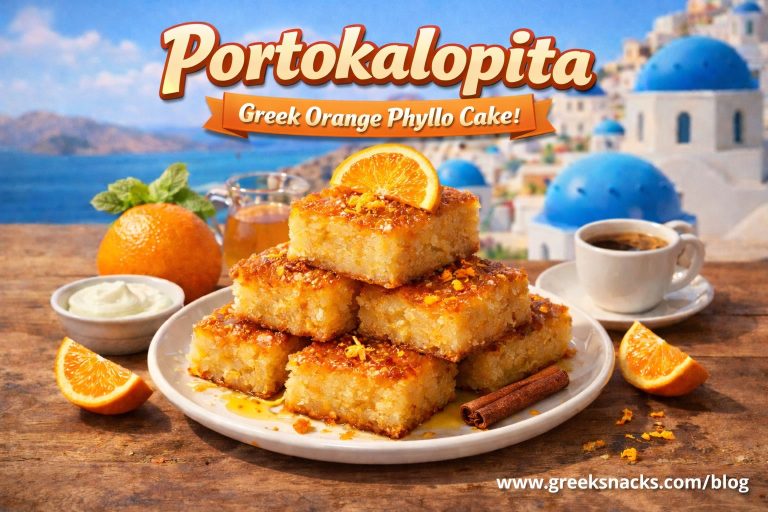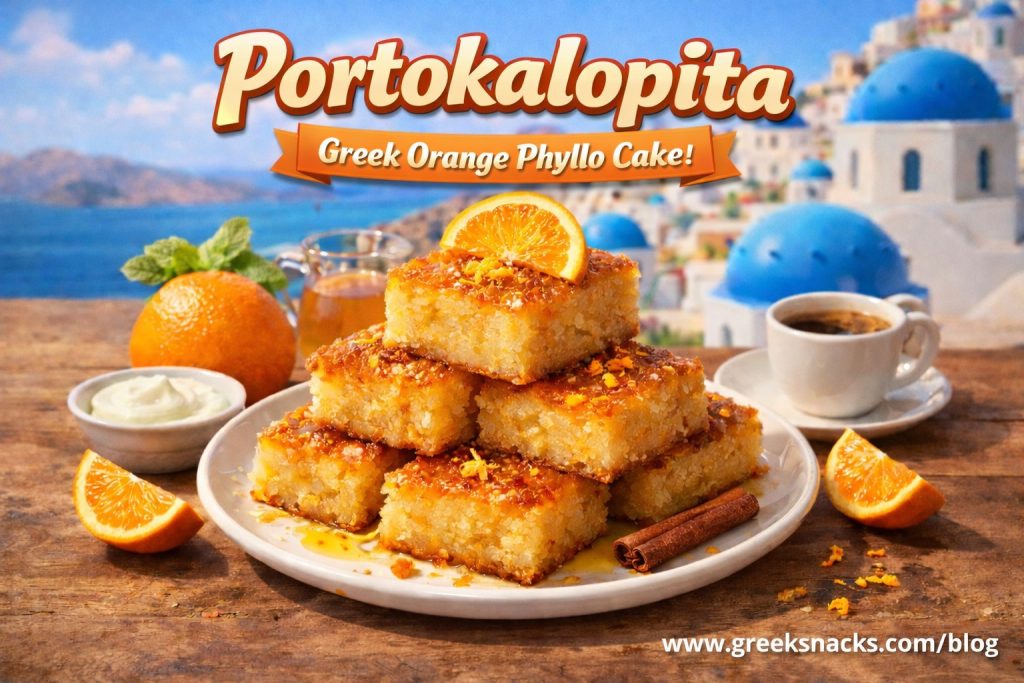
Portokalopita. This beloved Greek dessert is a fragrant orange cake made with shredded phyllo pastry, yogurt, eggs, and a sweet citrus syrup that soaks into the cake after baking. The result is a moist, aromatic treat bursting with fresh orange flavor and a slightly crisp texture from the baked phyllo.
Popular in bakeries and homes across Greece, Portokalopita is often served as a dessert after meals or enjoyed with a cup of coffee in the afternoon.
What Is Portokalopita?
Portokalopita literally means “orange pie” in Greek (“portokali” meaning orange and “pita” meaning pie). Despite the name, it resembles a syrup-soaked cake more than a traditional pie.
What makes this dessert unique is the use of dried and shredded phyllo dough mixed directly into the batter. Instead of layering phyllo sheets as in baklava, the pastry is torn into pieces and baked into the cake itself, creating a light yet textured interior.
Once baked, the cake is drenched with a warm orange syrup, which gives it its signature sweetness and moist consistency.
Key Ingredients
The magic of Portokalopita comes from simple ingredients combined in a clever way:
- Phyllo dough – dried and shredded for texture
- Fresh oranges – zest and juice provide vibrant citrus flavor
- Greek yogurt – adds richness and moisture
- Eggs – help bind the cake
- Sugar – sweetens both batter and syrup
- Vegetable or olive oil – keeps the cake soft
- Vanilla and cinnamon – optional flavor enhancers
These ingredients create a dessert that is both light and intensely flavorful.
How Portokalopita Is Made
1. Preparing the Phyllo
Phyllo sheets are first left out to dry and then shredded into small pieces. This step is essential because it prevents the pastry from becoming soggy in the batter.
2. Making the Batter
Eggs, sugar, yogurt, oil, orange zest, and orange juice are whisked together to create a smooth mixture.
3. Combining Ingredients
The shredded phyllo is folded into the batter, ensuring it is evenly distributed.
4. Baking
The mixture is poured into a baking dish and baked until golden and slightly crisp on top.
5. Adding the Syrup
While the cake is hot, a cool orange syrup is poured over it. The cake absorbs the syrup, becoming wonderfully moist and fragrant.
Flavor and Texture
Portokalopita offers a perfect balance of flavors:
- Bright citrus notes from fresh oranges
- Subtle sweetness from the syrup
- A delicate crunch from baked phyllo
- A soft, moist interior similar to a syrup cake
- It’s refreshing compared to heavier desserts, which is why it’s especially popular during spring and summer.
How It’s Served
Portokalopita is typically served:
- Slightly warm or at room temperature
- With Greek coffee or espresso
- Sometimes topped with powdered sugar
- Occasionally paired with vanilla ice cream or whipped cream
The cake often tastes even better the next day, once the syrup fully absorbs.
A Dessert That Feels Like Sunshine
Portokalopita is a wonderful example of Greek baking—simple ingredients transformed into something extraordinary. Its bright orange aroma, syrupy sweetness, and delicate texture make it a dessert that feels both comforting and refreshing.
Whether enjoyed in a seaside café in Greece or baked at home, Portokalopita brings a taste of the Mediterranean to every bite.