Greek Easter is one of the most important and widely celebrated holidays in Greece, filled with deep traditions, family gatherings, and, most importantly, incredible food. Known for its rich flavors and symbolic dishes, Greek Easter cuisine brings people together after the long Lenten fast, marking a joyful celebration of renewal and faith.
If you’ve ever wondered what makes Greek Easter meals so special, here’s a guide to the must-try foods you simply shouldn’t miss.
1. Magiritsa Soup – The Midnight Tradition
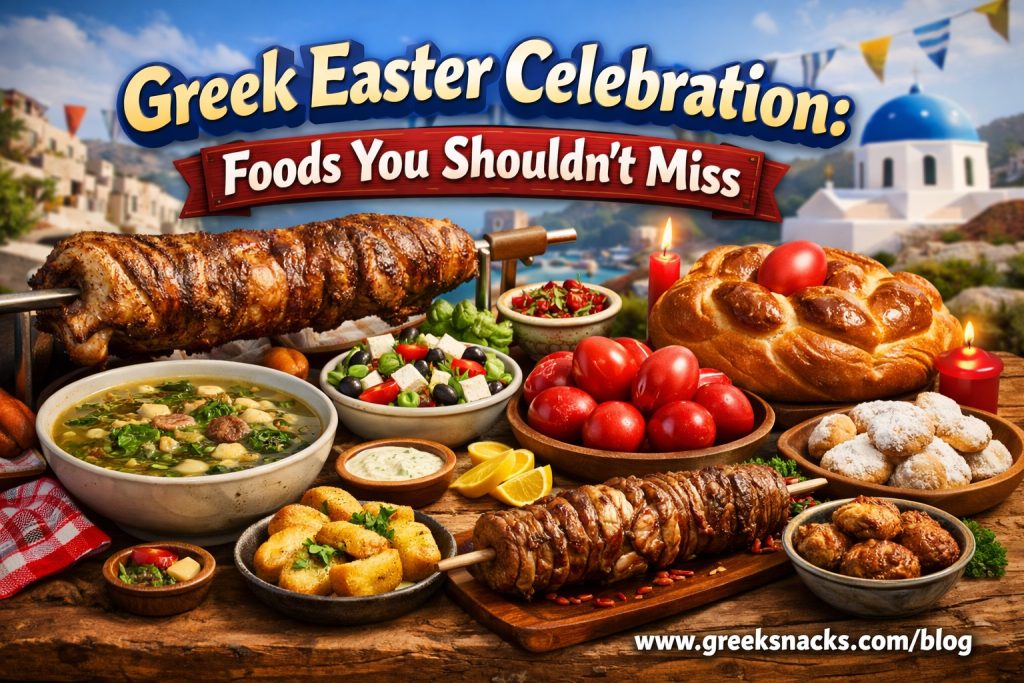
After the midnight church service on Holy Saturday, families break their fast with magiritsa, a traditional Easter soup made from lamb offal, fresh herbs, lettuce, and lemon-egg sauce (avgolemono).
This dish is symbolic—it gently reintroduces meat into the diet after 40 days of fasting. Its rich, lemony flavor is both comforting and refreshing after a long night of celebration.
2. Roast Lamb – The Star of Easter Sunday
No Greek Easter table is complete without slow-roasted lamb. Traditionally cooked on a spit (souvla), the lamb is seasoned simply with olive oil, garlic, oregano, and lemon.
It represents sacrifice and celebration, and families often gather outdoors to roast it slowly for hours while enjoying music, dancing, and wine.
3. Tsoureki – Sweet Easter Bread
Tsoureki is a soft, braided sweet bread flavored with orange zest, mahleb, and mastic. It is usually decorated with a red-dyed egg in the center.
The bread symbolizes life and resurrection, and its sweet aroma fills Greek homes during Easter weekend.
4. Red-Dyed Eggs – Symbol of Life and Renewal
One of the most iconic Greek Easter traditions is dyeing eggs bright red. The color represents the blood of Christ and the promise of life and rebirth.
Families play a game called tsougrisma, where they tap eggs against each other—the last uncracked egg is believed to bring good luck.
5. Kokoretsi – A Bold Traditional Dish
For those looking for something more adventurous, kokoretsi is a must-try. Made from seasoned lamb or goat intestines wrapped around offal and roasted on a spit, it is a beloved delicacy in many regions of Greece.
Though it may sound unusual, it is deeply traditional and highly flavorful.
6. Greek Salads and Seasonal Sides
To balance the rich meats, Greek Easter tables also include fresh sides like:
- Horiatiki (Greek village salad with feta and olives)
- Roasted potatoes with lemon and oregano
- Wild greens and herb pies (horta and hortopita)
These dishes bring freshness and balance to the feast.
7. Easter Sweets and Desserts
Greek Easter celebrations wouldn’t be complete without sweets such as:
- Melomakarona (honey cookies)
- Kourabiedes (buttery almond cookies with powdered sugar)
- Seasonal fruit and pastries
These desserts add a final touch of sweetness to a rich and festive meal.
Greek Easter is more than just a religious celebration—it is a cultural experience filled with flavor, family, and tradition. From the first spoon of magiritsa to the last bite of tsoureki, every dish tells a story of heritage and togetherness.
If you ever find yourself in Greece during Easter, don’t miss the chance to experience this unforgettable culinary celebration firsthand.