Greek snacking is far more than a quick bite between meals—it’s a cultural expression shaped by centuries of history, geography, and community life. From the rustic simplicity of village kitchens to the fast-paced rhythm of modern cities, Greece’s snacking traditions have evolved while preserving their authentic soul. Rooted in fresh ingredients, shared experiences, and time-honored recipes, these snacks tell a story of continuity and adaptation.
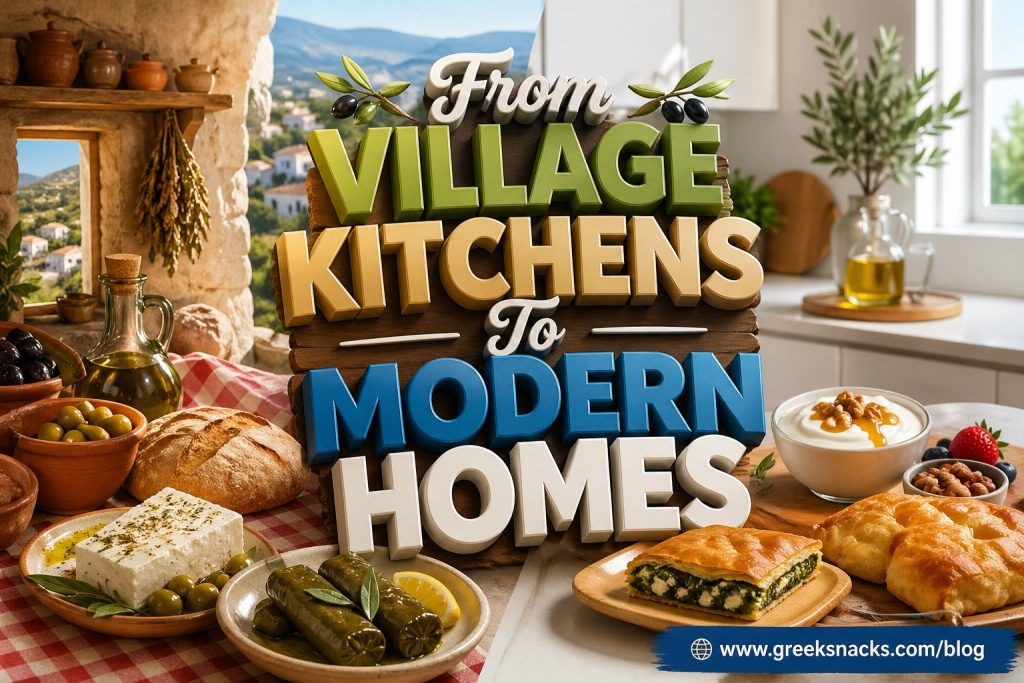
The Heart of Tradition: Village Kitchens
In traditional Greek villages, the kitchen was the center of daily life. Meals were not rushed, and snacks were never an afterthought. Instead, they were woven into the rhythm of the day—something to enjoy after morning chores, during afternoon breaks, or while gathering with neighbors.
Village snacks were built on necessity and resourcefulness. Families relied on what they grew, harvested, or produced locally. Bread baked in wood-fired ovens, olives cured at home, and cheeses crafted from fresh milk formed the foundation of everyday snacking.
Nothing went to waste. Leftover dough might become small pies, extra vegetables turned into savory fillings, and stale bread revived with olive oil and tomatoes. These practices not only minimized waste but also gave rise to some of Greece’s most beloved snacks.
Ingredients That Define Greek Snacking
At the core of Greek snacks is a commitment to simplicity and quality. Rather than relying on heavy processing or artificial flavors, Greek cuisine highlights natural ingredients.
Some staples include:
- Olive oil, often referred to as “liquid gold”
- Fresh vegetables like tomatoes, cucumbers, and greens
- Herbs such as oregano, thyme, and dill
- Cheeses like feta and mizithra
- Grains, especially wheat and barley
These ingredients come together in iconic snacks such as Spanakopita, a flaky pastry filled with spinach and herbs, and Tiropita, a rich cheese-filled delight. Another classic is Dakos, which combines crunchy barley rusks with tomatoes, olive oil, and cheese for a refreshing yet hearty snack.
For those with a sweet tooth, Loukoumades offer a taste of indulgence—crispy on the outside, soft on the inside, and drizzled with honey.
Snacking as a Social Ritual
In Greece, food is rarely eaten alone, and snacking is no exception. It’s deeply tied to social interaction and hospitality. Whether it’s sharing a small plate over coffee or gathering with friends in the evening, snacks often serve as a reason to connect.
The concept of meze perfectly captures this spirit. Meze refers to a variety of small dishes served alongside drinks, encouraging conversation and communal enjoyment. These can range from simple olives and bread to more elaborate preparations like grilled vegetables or small pies.
Snacking, in this context, becomes less about satisfying hunger and more about creating moments—moments of laughter, storytelling, and togetherness.
The Shift to Urban Living
As Greece modernized and urban centers grew, daily life became faster and more structured. With busier schedules, the way people snack naturally evolved. However, rather than abandoning tradition, many Greeks adapted it to fit contemporary lifestyles.
In cities, bakeries and street vendors play a major role in keeping traditional snacks accessible. It’s common to grab a freshly baked pie on the go or pick up a quick snack between errands. Despite the convenience, the recipes often remain faithful to their origins.
Modern homes also reflect this blend of old and new. While some snacks are store-bought, many families still prepare traditional recipes at home—especially during weekends or special occasions.
Modern Interpretations and Global Influence
Today, Greek snacking traditions are not only alive within Greece but have also gained global popularity. As people worldwide shift toward healthier eating habits, Greek snacks have become a source of inspiration.
Modern adaptations include:
- Using whole-grain or gluten-free pastry for traditional pies
- Pairing Greek yogurt with honey, nuts, and fruits for a quick, nutritious snack
- Creating lighter versions of classic recipes with reduced oil or alternative ingredients
These innovations allow Greek snacks to fit into a wide range of diets while maintaining their essential character.
A Balance of Heritage and Innovation
What makes Greek snacking traditions truly remarkable is their balance. They have evolved without losing their identity. The same flavors that once filled village kitchens continue to thrive in modern apartments, cafés, and even international restaurants.
Technology and globalization have introduced new tools and influences, but the philosophy remains unchanged:
- Use fresh, high-quality ingredients
- Keep recipes simple and honest
- Share food with others
Why Greek Snacking Endures
The enduring appeal of Greek snacks lies in their authenticity. They are not designed to be trendy or complicated—they are designed to be real. Each bite carries a sense of history, a connection to the land, and a reminder of the importance of slowing down and enjoying food.
In a world increasingly dominated by fast food and convenience, Greek snacking traditions offer something different: a return to simplicity, balance, and meaningful connection.
From the humble beginnings of village kitchens to their place in today’s modern homes, Greek snacking traditions have stood the test of time. They continue to evolve, but their essence remains rooted in culture, community, and quality.
Whether it’s a flaky pie, a handful of olives, or a sweet bite of honey-soaked dough, Greek snacks are more than just food—they are a way of life, inviting everyone to pause, savor, and share.