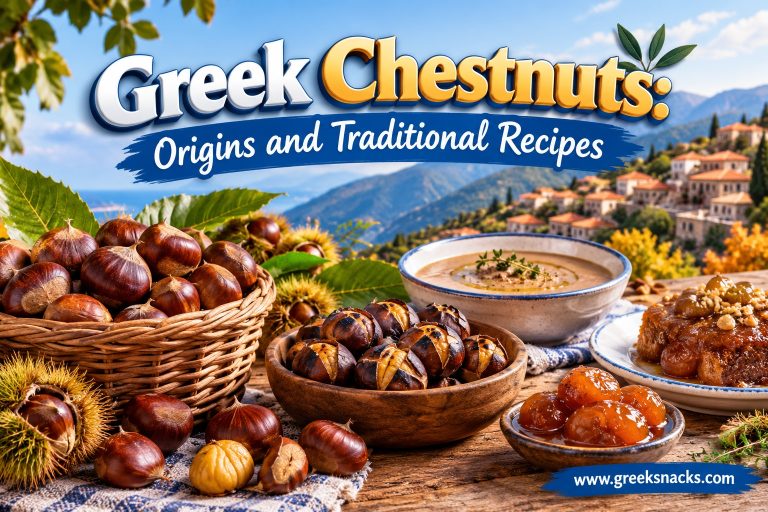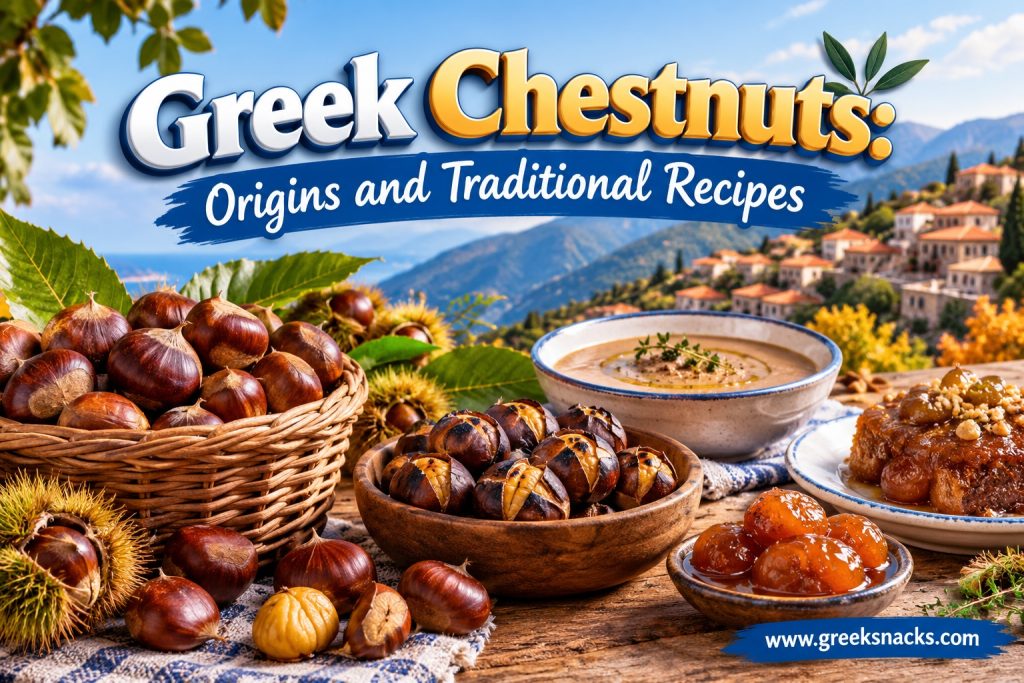
When autumn arrives in Greece, the cooler weather brings one of the country’s most beloved seasonal treats: chestnuts, known in Greek as kastana (κάστανα). Sold by street vendors, roasted over open fires, or prepared at home, chestnuts are closely associated with the Greek countryside, mountain villages, family gatherings, and the comforting flavours of autumn and winter.
Beyond their delicious taste, chestnuts have a long history in Greek food culture. They grow in mountainous areas, feature in traditional recipes, and continue to inspire everything from simple roasted snacks to festive desserts.
But where do Greek chestnuts come from, and what can you make with them? Let’s explore their origins, the regions where they grow, and the many ways Greeks enjoy this seasonal favourite.
Where Do Chestnuts Come From in Greece?
The sweet chestnut tree (Castanea sativa) grows well in areas with suitable rainfall, fertile soil, and cool mountain climates. It has been cultivated across parts of southern Europe and the Mediterranean for centuries, including Greece, where chestnuts remain an important seasonal agricultural product.
In Greece, chestnut trees are commonly found in mountainous regions, particularly where the climate and soil support their growth. Some areas are especially associated with chestnut production and traditional chestnut celebrations.
1.Pelion and Karitsa, Thessaly
The Pelion Peninsula in Thessaly is known for its green landscapes, traditional stone villages, forests, and seasonal produce. Its mountainous environment provides favourable conditions for chestnut trees, making it an appealing destination during autumn.
During autumn, chestnuts become a familiar sight in local markets and village shops. Visitors exploring Pelion’s picturesque settlements may find roasted chestnuts, homemade sweets, and other seasonal products made from the harvest.
Karitsa, a traditional village in the wider Thessaly region, can also be included in an exploration of the area’s rural landscapes and local traditions. Surrounded by natural scenery, the village offers a glimpse into the quieter side of Greek village life, where seasonal produce and local customs remain an important part of the autumn experience.
The combination of Pelion’s mountain scenery, traditional architecture, chestnut harvest, and villages such as Karitsa makes this part of Thessaly an appealing destination for travellers interested in Greek autumn traditions and authentic rural experiences.
2. Crete
Crete is famous for its olive oil, cheeses, herbs, and distinctive regional cuisine, but it also has areas where chestnuts grow.
The western part of the island, particularly the mountainous areas around Chania, has a long association with chestnut cultivation. Villages such as Elos are known for their chestnut harvest and autumn celebrations.
Chestnuts from Crete are enjoyed roasted, boiled, or incorporated into local dishes. Their mild sweetness and satisfying texture make them suitable for both savoury meals and desserts.
3. Arcadia and the Peloponnese
The mountainous interior of the Peloponnese also offers suitable conditions for chestnut cultivation. Arcadia, with its forests, traditional settlements, and cooler mountain areas, is part of a wider region where chestnuts form part of the seasonal food culture.
In rural communities, chestnuts can be enjoyed as a simple snack or used in homemade recipes, especially when families gather during the colder months.
4. Other Mountainous Areas of Greece
Chestnuts are also cultivated in other parts of mainland Greece, including areas of Macedonia and Epirus, as well as parts of Central Greece and Evia.
The exact harvest and availability depend on the local climate, elevation, and growing conditions. In many areas, the chestnut season begins in early autumn and continues through the later autumn months.
For many Greeks, seeing fresh chestnuts appear in markets is a reminder that the season for warming foods, roasted nuts, and hearty meals has arrived.
When Is Chestnut Season in Greece?
The Greek chestnut season generally runs from September through November, although the precise timing varies by region, altitude, and weather conditions.
Early in the season, fresh chestnuts begin appearing in local markets and roadside stalls. As the harvest progresses, they become more widely available in greengrocers, supermarkets, village shops, and seasonal markets.
Autumn is also an excellent time to visit chestnut-growing villages, where visitors can discover local produce and experience the changing colours of the Greek countryside.
Fresh chestnuts should feel firm and relatively heavy for their size, with smooth, shiny shells. Avoid nuts with mould, extensive damage, or signs of deterioration.
Traditional Ways to Enjoy Chestnuts in Greece
One of the reasons chestnuts remain popular is their versatility. They can be prepared in several ways, depending on whether you want a quick snack, a hearty meal, or something sweet.
Here are some traditional and popular ways to enjoy them.
1. Roasted Chestnuts (Kastana Psita)
Roasted chestnuts are perhaps the most recognisable way to enjoy this seasonal treat.
In Greek, kastana psita means roasted chestnuts. During the colder months, street vendors in some Greek towns and cities sell them freshly roasted, often from small charcoal or gas-fired roasting stands.
The shells become darker during cooking, while the flesh inside turns tender, soft, and pleasantly sweet. Once cool enough to handle, the shells are peeled away to reveal the warm chestnut inside.
Roasted chestnuts are especially enjoyable on a cool evening, during an autumn walk, or while exploring a traditional Greek village.
How to make them at home:
- Wash the chestnuts and dry them.
- Carefully cut a cross into the flat side of each shell to help prevent pressure from building during cooking.
- Roast them in a suitable chestnut pan, oven, or over a controlled heat until the shells open and the flesh becomes tender.
- Allow them to cool slightly before peeling.
The cooking time depends on the size of the chestnuts and the method used. Always score the shells before roasting.
2. Boiled Chestnuts
Boiled chestnuts are another simple way to prepare them. This method produces soft, moist chestnuts that are easy to peel and enjoy.
To prepare them, wash the chestnuts, score their shells, and simmer them in water until tender. The cooking time varies depending on their size and freshness.
Some people enjoy boiled chestnuts with a little salt, while others prefer them plain to appreciate their natural flavour.
They can also be peeled and added to other recipes, making them a convenient ingredient for soups, vegetable dishes, and desserts.
3. Chestnut Soup
Chestnut soup is a comforting dish suited to the colder months. Although recipes vary across Greece and the wider Mediterranean, chestnuts work particularly well in creamy, warming soups.
A simple version can be made with cooked, peeled chestnuts, onions, vegetable stock, olive oil, and a little thyme or other herbs.
The ingredients are simmered together and blended until smooth. A splash of milk or cream can be added for extra richness, although it is optional.
The result is a mildly sweet, earthy soup that works well as a starter or a light meal with crusty bread.
4. Chestnuts in Meat Dishes and Stuffing
Chestnuts are also used in savoury cooking, especially in recipes prepared for festive meals and family gatherings.
Their slightly sweet flavour complements pork, chicken, turkey, and other roasted meats. They can be combined with onions, herbs, mushrooms, rice, or dried fruit to make a hearty stuffing.
In Greek-inspired cooking, peeled chestnuts may also be added to slow-cooked meat dishes or paired with seasonal vegetables.
These combinations demonstrate how chestnuts can be more than a snack: they can provide flavour, texture, and substance to a complete meal.
5. Chestnut Sweets and Preserves
For those with a sweet tooth, chestnuts offer plenty of possibilities.
One traditional preservation method used in Greece is the glyko tou koutaliou, or spoon sweet. Depending on the recipe and region, chestnuts can be cooked in syrup and served in small portions as a sweet treat.
Chestnuts can also be used to prepare jams, purées, cakes, and other desserts.
Another popular preparation across Europe is marron glacé: chestnuts slowly candied in sugar syrup. Although it is not exclusively Greek, it is an elegant way to enjoy chestnuts during the festive season.
6. Chestnut Cake and Other Homemade Desserts
Chestnuts can be transformed into a smooth purée and incorporated into cakes, pastries, and other baked goods.
Chestnut flour is another option. It can be used in selected baking recipes to give food a distinctive, mildly sweet flavour, although its properties differ from those of wheat flour.
For a simple dessert, cooked chestnuts can be mashed with a little honey, cinnamon, or vanilla. The mixture can be served on its own or used as a filling for cakes and pastries.
These recipes are particularly appealing in autumn, when fresh chestnuts are available and home cooks look for ways to make the most of the harvest.
Greek Chestnut Festivals and Autumn Traditions
Chestnuts are not just a food in Greece; in some communities, they are also part of local identity and seasonal celebration.
One example is the chestnut festival associated with Elos in western Crete. Such events celebrate the harvest and give visitors an opportunity to experience local products, village hospitality, and regional traditions.
Depending on the event, visitors may find roasted chestnuts, local food, music, and opportunities to explore the surrounding countryside.
Chestnut celebrations also provide a valuable way for smaller communities to showcase their agricultural heritage and welcome visitors outside the busy summer tourism season.
For travellers interested in authentic Greek experiences, visiting a chestnut-growing village in autumn can offer a different perspective on the country’s food culture.
Festival dates and programmes vary from year to year, so it is worth checking local announcements before planning a visit.
Are Chestnuts Healthy?
Chestnuts are nutritious and differ from many other nuts because they contain considerably more starch and less fat.
They provide carbohydrates for energy, dietary fibre, and nutrients such as potassium and vitamin C. They also contain smaller amounts of other vitamins and minerals.
Unlike almonds and walnuts, chestnuts are relatively low in fat. Their starchy texture makes them particularly satisfying when roasted or boiled.
However, chestnuts still contribute carbohydrates and calories, so portion size matters, especially for people monitoring their carbohydrate intake.
For everyday enjoyment, plain roasted or boiled chestnuts are a straightforward option. Sweetened chestnut desserts may contain considerably more sugar.
How to Choose, Store, and Prepare Fresh Chestnuts
If you are buying fresh Greek chestnuts during autumn, a few simple tips can help you get the best results.
Choose firm chestnuts. Look for smooth, glossy shells and nuts that feel heavy for their size. Avoid those with mould, holes, or soft spots.
Store them carefully. Fresh chestnuts contain moisture and do not keep as long as many dried nuts. Store them in a breathable container in the refrigerator and use them promptly. Discard any that develop mould or an unpleasant smell.
Score before cooking. Always make a cut through the shell before roasting. This allows steam to escape and helps prevent the chestnuts from bursting.
Peel while warm. Chestnut shells and the thin inner skin are generally easier to remove while the nuts are still warm. Let them cool enough to handle safely.
Use cooked chestnuts in different recipes. If you prepare more than you need, peel the cooked chestnuts and refrigerate them promptly, or freeze them for later use.
Why Chestnuts Remain a Favourite in Greece
Greek food culture is closely connected to the seasons. Olives, grapes, figs, walnuts, and chestnuts each have their own place in the agricultural calendar, and their arrival often signals a change in the foods people prepare at home.
Chestnuts stand out because they are both simple and versatile. They can be roasted and eaten straight from their shells, boiled for a quick snack, added to a warming soup, combined with meat, or turned into a delicious dessert.
They also connect modern Greek life with the traditions of mountain villages, where chestnut trees have long been part of the landscape and the harvest has provided food for local communities.
For Greeks living abroad, the familiar taste of roasted kastana can bring back memories of autumn walks, village festivals, and family gatherings. For visitors to Greece, chestnuts offer another way to discover the country’s seasonal cuisine beyond the well-known dishes served during summer.
Chestnuts, or kastana, are one of autumn’s most enjoyable seasonal foods in Greece. Grown in mountainous areas such as Pelion, Crete, Arcadia, and other parts of the country, they have a strong connection to local agriculture and traditional cooking.
Whether roasted by a street vendor, boiled at home, served in a warming soup, added to a festive meal, or transformed into a sweet preserve, chestnuts offer many ways to enjoy the flavours of the Greek autumn.
So, when chestnut season arrives, why not try preparing them at home or visit a Greek village known for its chestnut harvest? You may discover that one of the simplest seasonal foods can also be one of the most memorable.
At GreekSnacks.com, we celebrate the flavours, ingredients, and traditions that make Greek food special. From seasonal produce to traditional treats, there is always something new to discover in Greece’s rich culinary heritage.