If you want to experience Greece beyond its beaches, ancient ruins and busy tourist towns, panigyria offer one of the best ways to discover the country’s village culture.
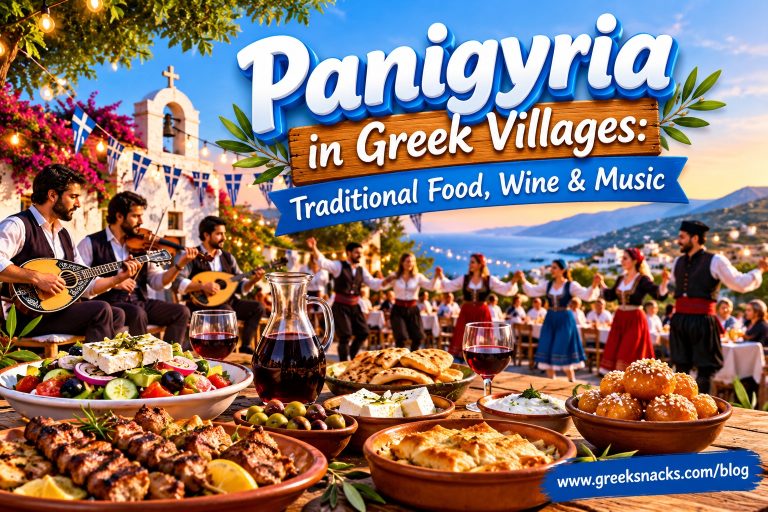
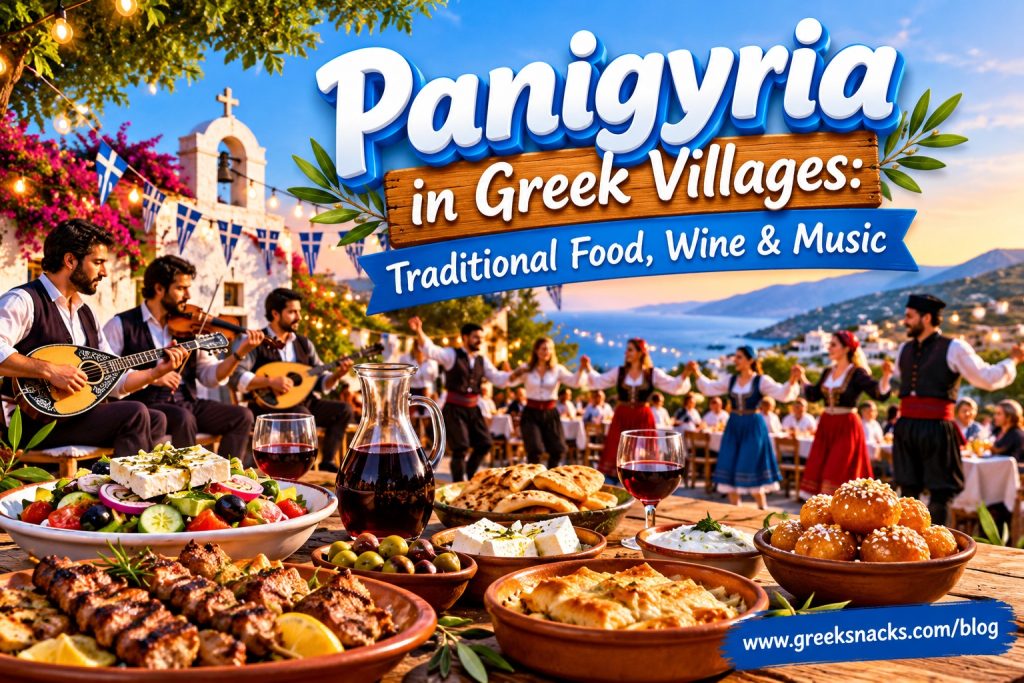
A panigyri (plural: panigyria) is a traditional Greek festival, usually connected to the feast day of a local patron saint or an important religious celebration. In villages and islands across Greece, these celebrations bring together locals and visitors for an evening of traditional food, wine, dancing, live music and community spirit.
Some panigyria are small village gatherings, while others attract thousands of people and have become famous summer events.
What Is a Panigyri?
The word panigyri comes from the Greek word πανηγύρι, meaning a festival or public celebration. Traditionally, panigyria have strong connections to the Greek Orthodox calendar.
A typical celebration may begin with a church service or religious procession. Afterward, the village comes alive with tables, musicians, food and dancing.
The atmosphere can continue late into the night. It is common to see several generations of the same family celebrating together, while visitors are welcomed into the festivities.
For travelers, a panigyri can provide a very different experience from dining at a conventional Greek restaurant. Instead of simply ordering a meal, you become part of a communal celebration.
Traditional Food at Greek Panigyria
Food is one of the biggest attractions of a panigyri.
Large quantities of traditional dishes are prepared, often using recipes associated with the particular village or island. The menu varies considerably from region to region.
Some of the foods you may encounter include:
- Roasted lamb or goat — Often prepared in large quantities for the crowd.
- Souvla — Large pieces of meat slowly roasted over a fire.
- Souvlaki — Grilled meat served on skewers.
- Local cheeses — Villages and islands often have their own distinctive cheeses.
- Pies — Homemade savory pies filled with cheese, greens or meat.
- Loukoumades — Small fried dough balls served with honey or other toppings.
- Local breads — Fresh bread and traditional baked goods are common at village celebrations.
- Seasonal vegetables and salads — Often prepared with locally produced olive oil.
- Traditional sweets — Depending on the region, visitors may find honey-based desserts, pastries and other local treats.
One of the best parts of eating at a panigyri is that the food is often deeply connected to the local area. What you eat on an island in the Aegean may be very different from what you find at a mountain festival in Crete or mainland Greece.
Wine, Local Drinks and Greek Spirits
Drinks are just as important as food.
Greek wine is commonly served at village celebrations, particularly locally produced varieties. In some regions, visitors may also encounter traditional spirits such as tsipouro, tsikoudia or raki, depending on local customs.
On the islands, local wines can be a major part of the experience. Santorini, for example, is internationally known for its distinctive wines, while Crete has a strong wine and distilling tradition.
The important thing is to enjoy alcoholic drinks responsibly, especially because panigyria can last for many hours.
Music Is at the Heart of the Celebration
You cannot really understand a panigyri without experiencing its music.
Live musicians typically perform traditional Greek songs using instruments such as the violin, clarinet, lute, lyra and bouzouki, depending on the region.
The music is not simply background entertainment. It is what brings people onto the dance floor.
Different parts of Greece have their own musical traditions and dances. A festival in Crete can feel completely different from one in the Cyclades, the Ionian Islands or northern Greece.
Greek Dancing Until Late at Night
Once the music starts, dancing can continue for hours.
Traditional dances are often performed in groups, with people forming lines or circles and following established steps. Experienced dancers may lead while others join in and learn.
Visitors should not feel intimidated. One of the pleasures of a panigyri is joining the celebration, even if you don’t know every dance.
You may see people of all ages—from children to grandparents—dancing together.
Some of the Most Famous Panigyria in Greece
There are hundreds of religious festivals throughout Greece, but several have become particularly well known among travelers.
Some of the Most Famous Panigyria in Greece
There are hundreds of religious festivals throughout Greece, but several have become particularly well known among travelers.
Ikaria Panigyria
Ikaria is perhaps the island most strongly associated with panigyria.
Its summer festivals are famous for huge communal gatherings, traditional music, dancing and local food. Some celebrations continue from the evening until sunrise.
The Christos Raches area and other villages across Ikaria are particularly associated with lively summer panigyria.
The island’s relaxed attitude toward time and its strong community traditions make these festivals especially memorable.
Tinos Panigyria
Tinos has a particularly strong religious and cultural tradition, with numerous village celebrations throughout the summer.
Many festivals are connected to local churches and saints. After the religious ceremony, villagers gather for food, music and dancing.
The island’s numerous villages mean that travelers visiting during the summer may have several opportunities to experience a local celebration.
Crete’s Village Festivals
Crete has an enormous variety of local festivals.
Cretan panigyria are particularly famous for their music, with the Cretan lyra playing an important role in traditional performances.
Expect local food, wine or raki, energetic dancing and a strong sense of community.
Because Cretan villages have distinctive culinary traditions, these festivals can also be an excellent opportunity to discover regional dishes.
Paros and the Cyclades
The Cycladic islands host numerous summer panigyria.
On islands such as Paros, local religious celebrations can become lively social events featuring traditional dishes, music, dancing and drinks.
These celebrations offer travelers a chance to see a side of the Cyclades that is very different from the beaches and nightlife associated with the islands.
Naxos Village Festivals
Naxos is another excellent island for experiencing traditional village celebrations.
The island has a strong agricultural heritage, and local festivals can showcase traditional food, cheese, meat, wine and music.
Many celebrations take place in villages away from the main tourist centers, making them an interesting addition to a Naxos itinerary.
When Do Panigyria Take Place?
Panigyria can take place throughout the year, but summer is the main season for visitors.
The period from roughly June through September is particularly active because warm evenings make outdoor celebrations ideal.
Many festivals are held around the feast day of a particular saint, meaning the exact date changes from village to village.
If you are planning a trip specifically around panigyria, check the local village, municipality, church or tourism information before traveling because dates can change from year to year.
How Should Visitors Behave at a Panigyri?
Although panigyria are popular with tourists, they are first and foremost community and religious celebrations.
A little cultural awareness goes a long way.
Dress respectfully, particularly when attending the religious part of the celebration. Ask before taking close-up photographs of people, especially during religious ceremonies.
When the dancing begins, don’t be afraid to participate if people welcome you into the group.
And most importantly, remember that a panigyri is not simply a tourist attraction. It is a living tradition that brings local communities together.
Why You Should Experience a Panigyri
Greek cuisine, music and hospitality are famous around the world, but a panigyri brings all three together in one unforgettable experience.
You can eat food prepared for an entire community, taste local drinks, listen to traditional musicians and watch generations of Greek families dance together.
It is also an opportunity to discover villages and traditions that you might otherwise miss on a typical Greek vacation.
Whether you find yourself dancing until sunrise in Ikaria, listening to Cretan lyra music in a mountain village or enjoying a summer feast on a Cycladic island, a panigyri can become one of the highlights of your trip.
For travelers looking to experience the real rhythm of Greek village life, few experiences are more authentic than joining a local panigyri.