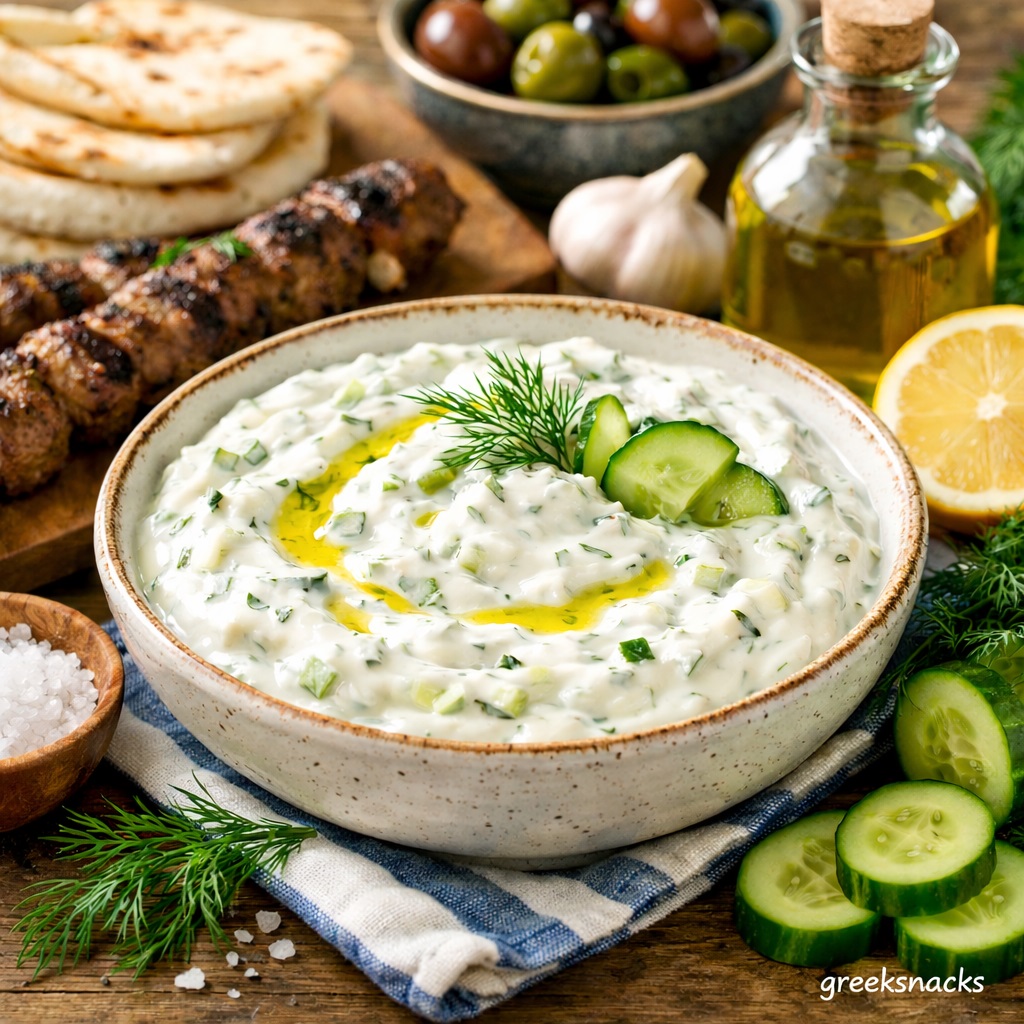
Greek cuisine is known for its simplicity, freshness, and balance, and few foods capture this better than tzatziki—the famous Greek white sauce. Creamy, cool, and full of flavor, tzatziki is widely used as a dip, spread, and side dish in Greek meals.
Origins of Tzatziki
Tzatziki traces its roots to ancient Greek and Eastern Mediterranean food traditions, where yogurt was a dietary staple valued for its cooling and digestive qualities. The sauce evolved through centuries of cultural interaction in the Mediterranean region.
What makes Greek tzatziki unique is its use of thick, strained Greek yogurt, combined with cucumber, garlic, olive oil, and herbs. Over time, it became a permanent feature of Greek cuisine, especially alongside grilled meats and breads.
Traditional Ingredients
Authentic Greek tzatziki is made using simple, fresh ingredients:
- 2 cups thick Greek yogurt (full-fat preferred)
- 1 medium cucumber
- 2–3 cloves garlic (finely minced or grated)
- 1–2 tablespoons extra virgin olive oil
- 1 tablespoon white wine vinegar or fresh lemon juice
- Salt to taste
- 1–2 tablespoons fresh dill (finely chopped)
- Optional: fresh mint for extra freshness
How to Make Tzatziki
- Prepare the cucumber
Grate the cucumber and squeeze out as much water as possible using your hands or a clean cloth. This step is essential to keep the sauce thick and creamy. - Mix the yogurt
Place the Greek yogurt in a bowl and stir until smooth. - Add garlic and cucumber
Mix in the grated cucumber and minced garlic evenly. - Season and flavor
Add olive oil, vinegar or lemon juice, salt, and fresh dill. Stir gently until well combined. - Chill and rest
Cover and refrigerate for at least 30 minutes. This allows the flavors to blend and deepen. - Serve
Drizzle lightly with olive oil before serving if desired.
Uses as a Spread and Dip
Tzatziki is extremely versatile and commonly used in Greek meals:
- As a dip with pita bread or vegetables
- As a spread in gyros, souvlaki, and sandwiches
- As a side sauce for grilled lamb, chicken, or fish
- As a lighter alternative to mayonnaise or creamy dressings
Variations of Tzatziki
- Extra-garlic tzatziki: For stronger flavor
- Mint tzatziki: Adds a refreshing twist
- Lemon tzatziki: Brighter and more tangy
- Vegan tzatziki: Made with plant-based yogurt
- Low-fat version: Using reduced-fat Greek yogurt
Cultural Importance
Tzatziki represents the Greek philosophy of food—fresh ingredients, simple preparation, and shared enjoyment. It plays an important role in meze platters and social dining, where meals are meant to be enjoyed together.
From its ancient yogurt-based origins to its modern global popularity, tzatziki remains one of Greece’s most iconic spreads. Easy to prepare and endlessly versatile, this classic white sauce continues to add freshness, balance, and tradition to meals around the world.