In Greek cuisine, olive oil is far more than just an ingredient—it is the foundation of flavor, culture, and tradition. Deeply rooted in the history of Greece, olive oil has shaped the way food is prepared, enjoyed, and even perceived. From rustic village dishes to refined modern recipes, its presence is constant and essential.
A Culinary Cornerstone
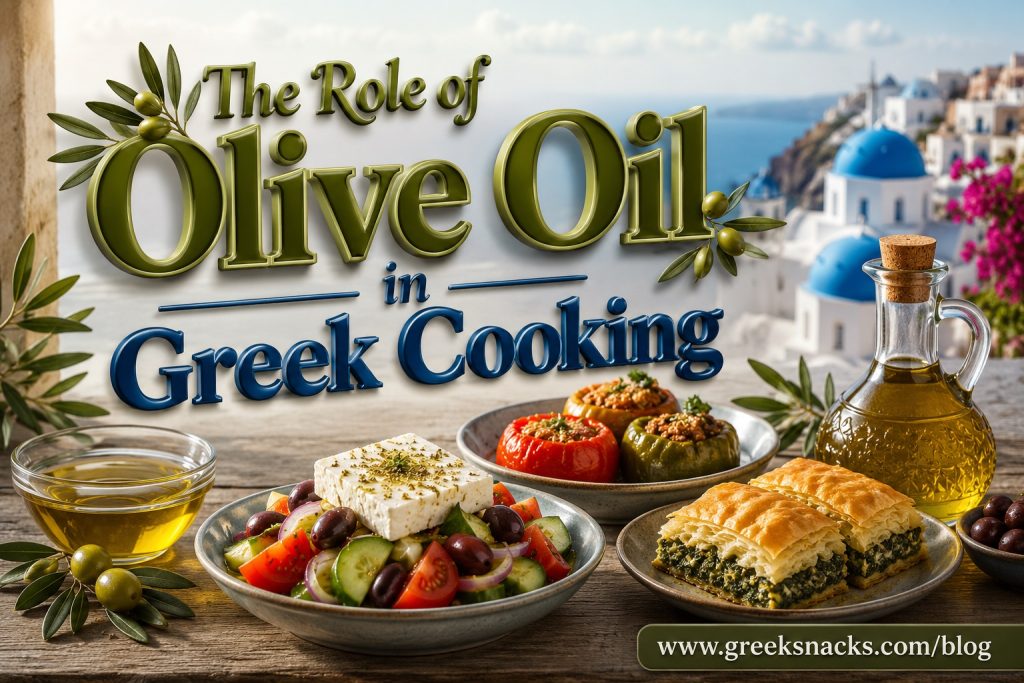
Greek cooking revolves around simplicity, and olive oil plays a leading role in enhancing natural flavors rather than masking them. Whether drizzled over fresh vegetables, used to sauté meats, or incorporated into slow-cooked stews, olive oil provides richness and depth. It is the base for countless traditional dishes such as Moussaka, Horiatiki, and Spanakopita.
Unlike many cuisines that treat oil as a secondary element, Greek recipes often call for generous amounts of olive oil. This practice reflects both abundance and a philosophy of cooking that values quality ingredients above complexity.
Popular Greek Foods Cooked with Olive Oil
Olive oil is at the heart of many beloved Greek dishes. Here are some standout examples:
- Gemista – Tomatoes and peppers stuffed with rice and herbs, baked slowly in olive oil until tender and aromatic.
- Briam – A Mediterranean-style roasted vegetable dish, similar to ratatouille, rich in olive oil and herbs.
- Fasolada – A traditional white bean soup where olive oil adds body and depth.
- Souvlaki – Meat marinated in olive oil, lemon, and herbs before grilling.
- Tzatziki – A refreshing dip made with yogurt, cucumber, garlic, and a drizzle of olive oil.
- Dolmades – Vine leaves filled with rice and herbs, cooked gently in olive oil.
These dishes highlight how olive oil is used not just for cooking, but also for marinating, roasting, and finishing.
A Symbol of Health and Longevity
Olive oil is a central component of the Mediterranean Diet, widely regarded as one of the healthiest eating patterns in the world. Rich in monounsaturated fats and antioxidants, it has been linked to heart health, reduced inflammation, and overall longevity.
In Greece, olive oil is consumed daily, often in its purest form. Bread dipped in fresh olive oil, vegetables lightly dressed, and legumes cooked slowly in oil-rich sauces are everyday staples.
From Grove to Table
The importance of olive oil begins long before it reaches the kitchen. Olive trees have been cultivated in Greece for thousands of years, with some groves dating back to ancient times. The harvesting process—often still done by hand—reflects a deep respect for tradition and craftsmanship.
High-quality extra virgin olive oil, prized for its low acidity and robust flavor, is considered the gold standard. Its taste can vary depending on the region, soil, and olive variety, giving each bottle a unique character.
Flavor Enhancer and Finishing Touch
In Greek cooking, olive oil is used at every stage—from preparation to presentation. It is not uncommon for dishes to be finished with an extra drizzle just before serving, adding a fresh, aromatic layer that elevates the entire meal.
Cultural and Emotional Significance
Beyond its culinary uses, olive oil holds symbolic value in Greek life. It represents hospitality, prosperity, and connection to the land. Offering food prepared with olive oil is seen as an act of generosity and care.
Olive oil is the heart of Greek cooking, influencing everything from taste and technique to health and heritage. Its role extends beyond the kitchen, embodying a way of life that values simplicity, quality, and tradition. In every drop, there is a story—one that continues to define the essence of Greek cuisine.